
For simple property damage claims, choose a quick settlement within two to six weeks. For complex personal injury claims where insurance adjusters actively use your medical history, social media, and delayed treatment against you, choose to wait and fight for a full recovery, which typically takes six to eighteen months. Insurers intentionally drag out the process because they know financial pressure forces injured victims to accept low-ball offers. If you resolve a claim too quickly before completing your medical treatment, you waive your right to seek additional compensation for unforeseen complications. Conversely, if you wait too long without proper representation, you risk violating California’s strict legal deadlines. To secure the maximum recovery, you must document every detail of your accident immediately, follow your doctor’s orders precisely, and allow an experienced attorney to handle negotiations. Understanding this timeline and the tactics adjusters use to stall is your strongest weapon in securing a fair settlement.
Key Takeaways
- Simple property damage claims usually resolve within two to six weeks, while bodily injury claims often take six to eighteen months or more.
- Insurance adjusters use your medical history, gaps in medical treatment, and social media activity to delay and devalue your claim.
- Under California law, you generally have two years from the date of the accident to file a personal injury lawsuit, but exceptions can shorten this window.
- Settling too quickly prevents you from recovering compensation for future medical complications that may arise after the papers are signed.
- Hiring an experienced personal injury attorney holds insurance carriers to strict regulatory timelines and prevents bad-faith delay tactics.
The Timeline and Stages of an Accident Insurance Claim
Resolving an accident insurance claim involves a structured series of legal, medical, and administrative steps that dictate how long the process takes. The clock begins the moment the collision occurs, but the path to a final payout is rarely a straight line. Every insurer must investigate the incident, review medical records, assess property damage, and determine liability before issuing a single dollar of compensation.
For a basic property damage claim, the process is relatively rapid. Your vehicle is inspected by an insurance adjuster or an approved repair shop, an estimate is generated, and payment is authorized within a few weeks. This speed is possible because the costs are finite and easily documented. However, when bodily injuries are involved, the timeline stretches significantly. A personal injury claim cannot be accurately valued until you reach Maximum Medical Improvement, which is the point where your recovery has stabilized and future medical needs are predictable.
Once you reach this medical milestone, your legal team compiles a comprehensive demand package. This package includes all medical bills, proof of lost wages, and a detailed narrative of how the accident impacted your life. Under regulations enforced by the California Department of Insurance, insurers must acknowledge your claim within 15 days and accept or deny it within 40 days of receiving proof of claim. However, insurance companies frequently request extensions or demand additional documentation to legally extend these windows, adding months to the overall timeline.
The Factors That Influence How Long an Accident Insurance Claim Takes to Resolve
Several critical variables, ranging from the severity of your physical injuries to the clarity of liability, directly determine how long an insurance claim remains open. No two accidents are identical, and even seemingly minor disputes can add months to your wait. Understanding these variables helps you set realistic expectations and recognize when an insurance carrier is acting in bad faith.
The severity of your injuries is the single most influential factor. Minor injuries like mild whiplash may resolve in a few months, allowing for a quick settlement. Severe, catastrophic injuries require ongoing care, specialized evaluations, and long-term prognoses, which naturally extends the timeline. If you rush to settle while still undergoing treatment, you run the risk of running out of money before your medical care is complete.
Liability disputes also create massive delays. If the insurance company believes you share fault for the accident, they will prolong their investigation to gather evidence supporting their theory. California operates under a comparative negligence system, meaning your compensation is reduced by your percentage of fault. To understand how liability splits affect your timeline and recovery, read our guide when both drivers are at fault in California.
Additionally, the size of the insurance policy plays a major role. Small, state-minimum policies are often paid out quickly because the exposure for the insurance company is limited. When dealing with commercial vehicles or high-limit umbrella policies, insurers deploy highly experienced legal teams to scrutinize every detail, drag out negotiations, and minimize their financial exposure.
How Long After an Accident Can You Make a Claim in California?

In California, the legal time frame within which you must initiate an insurance claim or file a lawsuit is strictly governed by state statutes. If you miss these deadlines, you lose your legal right to seek compensation forever, regardless of how severe your injuries are or how clearly the other driver was at fault. Protecting your rights starts with understanding these varying legal clocks.
For most personal injury cases in California, the statute of limitations is two years from the date of the accident. This means you must either settle your claim or file a formal lawsuit in court within this two-year window. If your claim is purely for property damage, state law grants you a slightly longer period of three years to seek compensation for your vehicle or personal items.
However, these deadlines shrink dramatically if a government entity is involved. If you were hit by a city bus, a government-owned vehicle, or if a poorly maintained public road caused your crash, you must file an administrative claim within six months of the accident. The California Highway Patrol and other state agencies maintain strict filing protocols that leave no room for administrative errors.
While the statute of limitations gives you up to two years to file a lawsuit, you should never wait that long to start your insurance claim. Your insurance policy likely contains a clause requiring you to report any accident “promptly” or “within a reasonable time,” which usually means within 24 to 72 hours. Waiting months to notify the insurer gives them a perfect excuse to deny your claim entirely, arguing that the delay made it impossible to investigate the scene or verify your injuries.
What Insurance Adjusters Use Against You to Delay Your Accident Settlement
Insurance adjusters employ a variety of strategic tactics designed to delay the claims process, devalue your injuries, and pressure you into accepting an inadequate settlement. They are not neutral investigators; their primary goal is to protect their company’s bottom line. Knowing what they are looking for allows you to avoid costly mistakes that prolong your case.
Your prior medical history is one of the first things an adjuster will weaponize against you. They will request a broad, unlimited medical authorization release, claiming they need to verify your injuries. In reality, they are searching through your past medical records for any previous back pain, neck strain, or joint issues to claim your current pain is a pre-existing condition. This search and the subsequent disputes can halt settlement negotiations for months.
They will also closely monitor your physical therapy and doctor visits. If you have a single gap in your medical care, miss an appointment, or fail to fill a prescription immediately, the adjuster will use this as proof that you are not seriously hurt. They argue that an injured person would never skip treatment, and they will use this delay to stall negotiations while demanding secondary medical exams.
Social media is another digital goldmine for insurance defense teams. Adjusters routinely search public profiles on Instagram, Facebook, and TikTok. If you post a photo of yourself smiling at a family holiday or attending a local event while claiming severe physical pain, the adjuster will use these images as evidence of exaggeration. To learn how these defense tactics impact your financial recovery, review our comprehensive analysis of California car accident compensation.
Finally, adjusters use recorded statements to trap you into admitting fault or downplaying your pain. They will call you shortly after the accident when you are still shaken up, asking friendly questions like, “How are you feeling today?” A polite “I am doing okay” can be legally interpreted as an admission that you are not injured, drastically slowing down your path to a fair recovery.
Comparing Insurance Claim Timelines by Claim Type
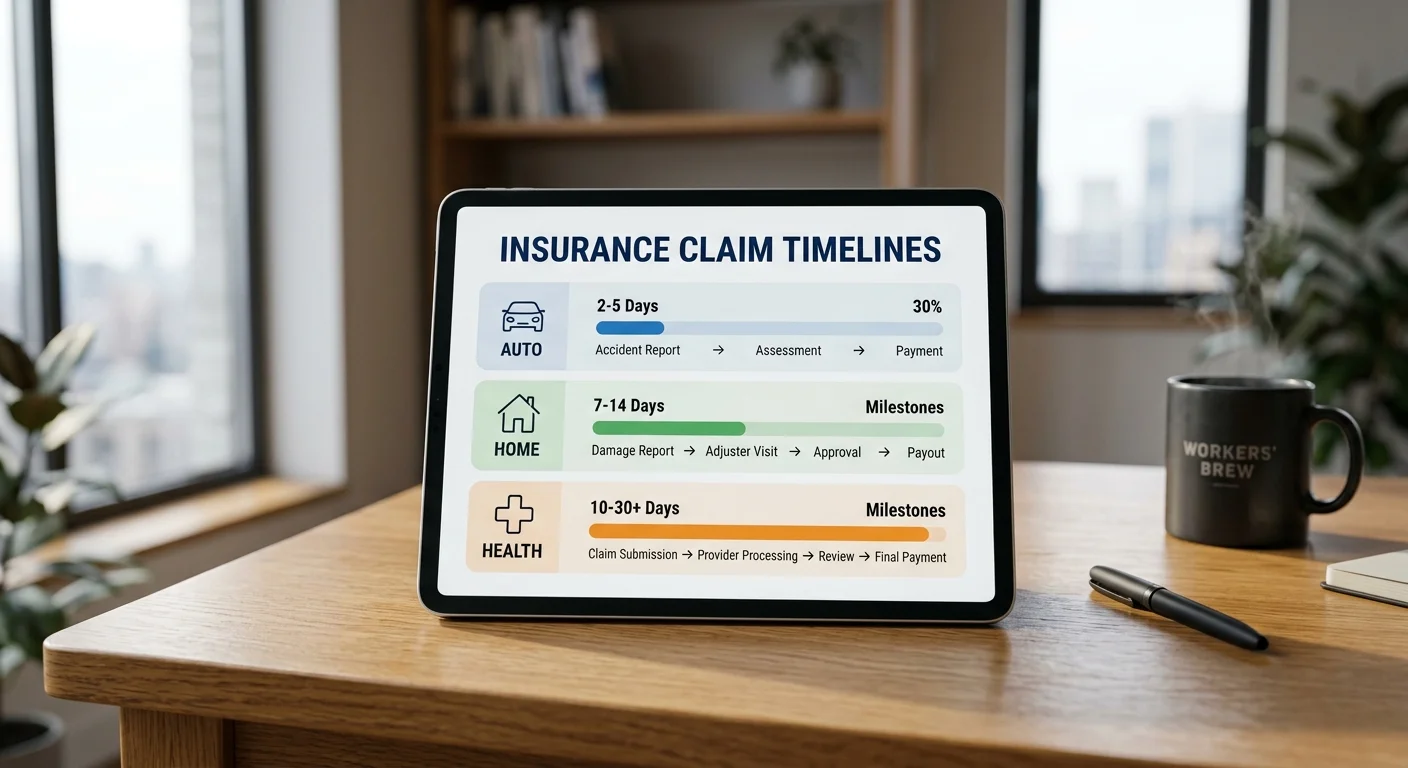
The specific type of insurance coverage you are pursuing dictates the administrative steps and overall timeline required to reach a final resolution. Property damage claims rely on objective repair estimates, whereas bodily injury claims depend on subjective medical recoveries and long-term prognoses. Understanding these differences helps you allocate your resources and patience effectively.
According to data published by the Insurance Information Institute, the average auto property damage claim is approximately $5,900, whereas bodily injury liability claims average over $24,000, illustrating why injury claims face far greater scrutiny. The more money at stake, the more administrative hurdles the insurer will construct to delay the payout.
| Claim Type | Average Settlement Timeline | Typical Settlement Value Range |
|---|---|---|
| Property Damage Only | 2 to 6 Weeks | $1,500 to $12,000 |
| Minor Bodily Injury (Soft Tissue) | 3 to 6 Months | $5,000 to $25,000 |
| Severe / Catastrophic Injury | 9 to 24+ Months | $100,000 to $1,000,000+ |
| Uninsured Motorist Claim | 3 to 9 Months | $15,000 to $100,000+ (Policy Limits) |
| Commercial Truck Accident | 12 to 36 Months | $150,000 to $2,000,000+ |
As shown in the table, complex cases like commercial truck accidents or catastrophic injuries take significantly longer to resolve. This extended timeline is due to the extensive investigation required to determine multi-party liability, review commercial black box data, and calculate lifetime medical care costs. For a deeper understanding of what to expect during this journey, read our detailed guide on how long does a personal injury case take to settle.
How to Speed Up Your Insurance Claim Process Without Sacrificing Value

Although you cannot control the internal administrative speed of an insurance carrier, you can take specific, proactive steps to eliminate obstacles and expedite your settlement. By acting decisively and maintaining flawless documentation, you deny the insurer the opportunities they need to stall your case. Speeding up a claim is about removing the friction points that adjusters rely on to delay payouts.
You can dramatically accelerate your recovery timeline by following a precise, organized approach from day one. Use this step-by-step checklist to keep your claim moving forward without sacrificing the financial compensation you deserve:
- Seek medical attention within 24 hours of the accident, even if your pain feels minor, to establish an immediate link between the crash and your injuries.
- Call the police to the scene and secure a certified copy of the traffic collision report as soon as it becomes available.
- Collect contact details, insurance information, and vehicle details from all drivers involved, along with names and phone numbers of any eyewitnesses.
- Take clear photos and videos of the vehicle damage, the road conditions, skid marks, traffic signals, and your physical injuries.
- Keep an organized digital and physical folder containing all medical bills, prescription receipts, vehicle repair estimates, and proof of lost wages.
- Decline any requests from the opposing insurance company to provide a recorded statement or sign an unlimited medical release form.
- Consult an experienced personal injury attorney to manage all communications, ensuring the insurance company complies with state-mandated response deadlines.
By following these structured steps, you build an airtight case file that leaves no room for the insurer to argue about what happened or how badly you were hurt. A well-documented file forces adjusters to make serious offers quickly because they know they cannot win an extended dispute in court.
FAQ
How long do insurance companies have to settle a claim in California?
In California, insurance companies must acknowledge your claim within 15 days of receiving it and accept or deny the claim within 40 calendar days of receiving proof of claim. If the insurer needs more time to investigate, they must provide written notice every 30 days explaining the specific reasons for the delay.
What happens if the insurance company delays my claim on purpose?
If an insurer intentionally stalls your claim without a valid, documented reason, they may be acting in bad faith under California law. You can file an official complaint with the state insurance commissioner or pursue a bad-faith insurance lawsuit to recover additional damages for their unfair practices.
Can I sue an insurance company for taking too long?
You can sue an insurance company for unreasonable delays, but you must first establish that their stalling tactics constitute bad faith or a breach of contract. Working with a personal injury attorney allows you to file a lawsuit against both the negligent driver and potentially hold the insurance company accountable for stalling.
When should I hire a lawyer for an insurance claim?
You should hire a lawyer immediately if you suffer moderate-to-severe injuries, if liability is disputed, or if the insurance adjuster begins asking for recorded statements or past medical records. Early legal representation protects you from making mistakes that delay your payout and ensures all evidence is preserved.
Is it better to settle quickly or wait for a larger payout?
It is almost always better to wait until you have reached Maximum Medical Improvement before settling your claim. Settling too quickly provides immediate cash but prevents you from seeking more money if your injuries require additional surgeries, therapies, or result in permanent disability.
Which factors cause the longest delays in car accident settlements?
The longest delays are caused by ongoing medical treatments, disputes over who caused the crash, and challenges in obtaining police reports or commercial vehicle data. Additionally, multi-vehicle accidents involving several insurance companies trying to shift blame to one another can stall settlements for years.