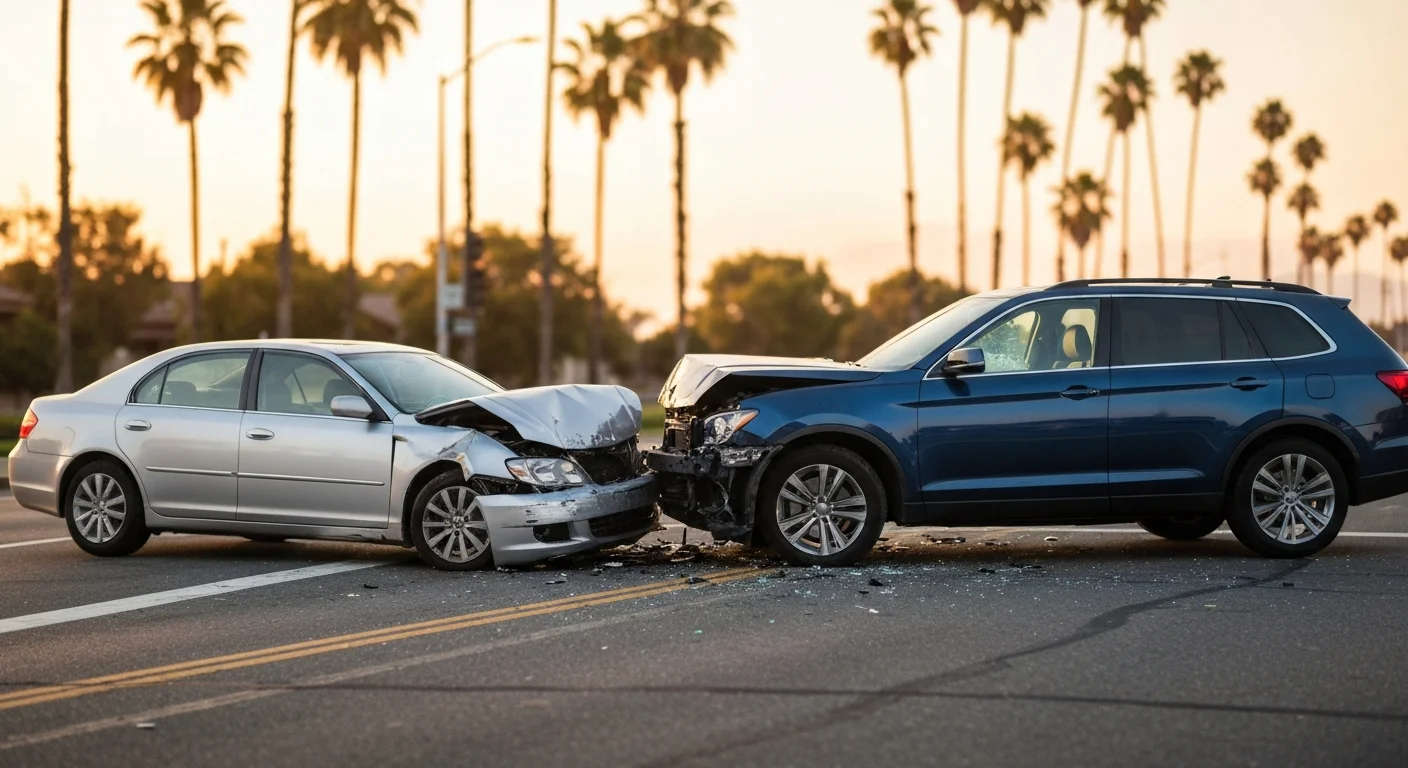
In California, if both drivers share fault in an accident, you can still recover compensation for your injuries. This is because California operates under a pure comparative negligence system. Under this rule, your financial recovery is reduced by your exact percentage of responsibility for the crash. For example, if you suffer $100,000 in damages but are found 20% at fault, you can still recover $80,000 from the other driver. Even if you are 99% at fault, you can legally pursue the other driver for the remaining 1% of your damages. To protect your rights and ensure insurance adjusters do not unfairly inflate your liability, you should partner with an experienced personal injury attorney immediately. Doing so is the single best way to minimize your assigned fault and maximize your settlement. Let us look closer at how these laws impact your recovery and how you can protect your rights in 2026.
Key Takeaways: Navigating Shared Fault in California

- California uses a pure comparative negligence law, which means you can recover compensation even if you were 99% at fault.
- Insurance companies routinely attempt to shift blame onto injured victims to reduce their payout obligations.
- Your final financial recovery is directly reduced by your percentage of responsibility for the collision.
- Working with a skilled personal injury attorney is vital to collect evidence and minimize your assigned fault.
Understanding Pure Comparative Negligence in California
Under California law, negligence is not always an all-or-nothing proposition. The state recognizes that many motor vehicle collisions involve mistakes by more than one person. To address this fairly, California civil courts follow the doctrine of pure comparative negligence. This legal framework ensures that every negligent party is held responsible for their specific portion of the damage they caused.
This system stands in contrast to rules in other states, where being even slightly at fault can bar you from recovery. In California, your ability to seek damages is preserved regardless of your level of blame. For example, if a jury determines that a plaintiff is 90% responsible for an accident, that plaintiff can still recover 10% of their total losses from the other driver. This rule protects seriously injured people from being completely cut off from financial relief.
The concept of comparative fault is established under California Civil Code Section 1714. This law mandates that everyone is responsible for injuries caused by their want of ordinary care. When multiple people fail to exercise ordinary care, the courts must weigh the negligence of each party. The resulting percentages determine who pays what. Because of this, proving the exact degree of fault is the most critical aspect of any shared-fault injury claim.
Comparative Negligence vs. Other Fault Systems
To understand how favorable California laws are for injured victims, it helps to compare them to other state systems. Different jurisdictions use varying rules to handle shared fault in personal injury claims. These rules fall into four primary categories: pure contributory negligence, pure comparative fault, 50% modified comparative fault, and 51% modified comparative fault.
In contributory negligence states, if you contribute to the accident in any way, you receive nothing. Even 1% of fault destroys your case. In modified comparative states, you can recover damages only if your fault falls below a certain threshold. If you cross that 50% or 51% limit, you are completely barred from recovering compensation from the other driver.
The table below highlights the differences between these systems to illustrate how California’s pure comparative fault system works in practice.
| Negligence System | How Fault Impacts Recovery | Typical States Using This Rule |
|---|---|---|
| Pure Contributory Negligence | Any percentage of fault (even 1%) completely bars the victim from recovering any compensation. | Alabama, Maryland, North Carolina, Virginia |
| Pure Comparative Negligence | Victims can recover damages even if they are 99% at fault. Payout is reduced by their fault percentage. | California, New York, Florida, Alaska |
| Modified Comparative Negligence (50% Bar) | Victims can recover damages only if their fault is 49% or less. Recovery is blocked at 50% fault. | Colorado, Georgia, Idaho, Utah |
| Modified Comparative Negligence (51% Bar) | Victims can recover damages only if their fault is 50% or less. Recovery is blocked at 51% fault. | Texas, Illinois, Ohio, Nevada |
How Insurance Adjusters Decide Who Is at Fault in a California Car Accident

Insurance claims adjusters do not have the final say on legal fault, but they make the initial determinations. Following an accident, adjusters from each insurance company will investigate the crash. They review police reports, examine vehicle damage, interview witnesses, and look at physical evidence. Based on this information, they assign a percentage of fault to each driver involved.
As a professional recommendation, you must understand that insurance adjusters are not neutral parties. Their primary goal is to protect their employer’s bottom line. By shifting even a small percentage of fault onto you, they can save their company thousands of dollars. They frequently use tricky questions during recorded statements to get you to admit to actions that suggest negligence.
According to research by the Insurance Research Council, claimants who hire an attorney receive significantly higher settlements on average than those who represent themselves. This is because attorneys know how to counter adjuster tactics. They present solid evidence to push back against unfair fault assessments, keeping your liability as low as possible.
Calculating Payouts When Both Parties Are at Fault in a California Car Accident
Calculating financial recovery in a shared-fault case requires basic math once the percentages of liability are established. First, the total value of your damages must be determined. This includes medical bills, lost wages, future rehabilitation needs, and non-economic damages like pain and suffering. Once this total is set, it is reduced by your percentage of fault.
For example, let us assume your total damages equal $150,000. If the investigation shows you were 30% at fault because you were slightly speeding, and the other driver was 70% at fault for failing to yield, your payout is adjusted. You would receive 70% of the total damages, which equals $105,000. The other driver’s insurance company pays this amount.
These calculations become more critical as financial pressures mount after a crash. According to the National Safety Council, the average economic cost of a motor vehicle crash involving injuries can easily range from $40,000 to over $100,000. Furthermore, rising costs have impacted insurance premiums. According to data from Bankrate, the average annual cost of full coverage car insurance in California is around $2,500 to $3,200. An accident on your record can cause your premium to jump by 40% or more, making it even more important to fight unfair fault assignments.
Essential Evidence Needed to Prove the Other Driver’s Fault
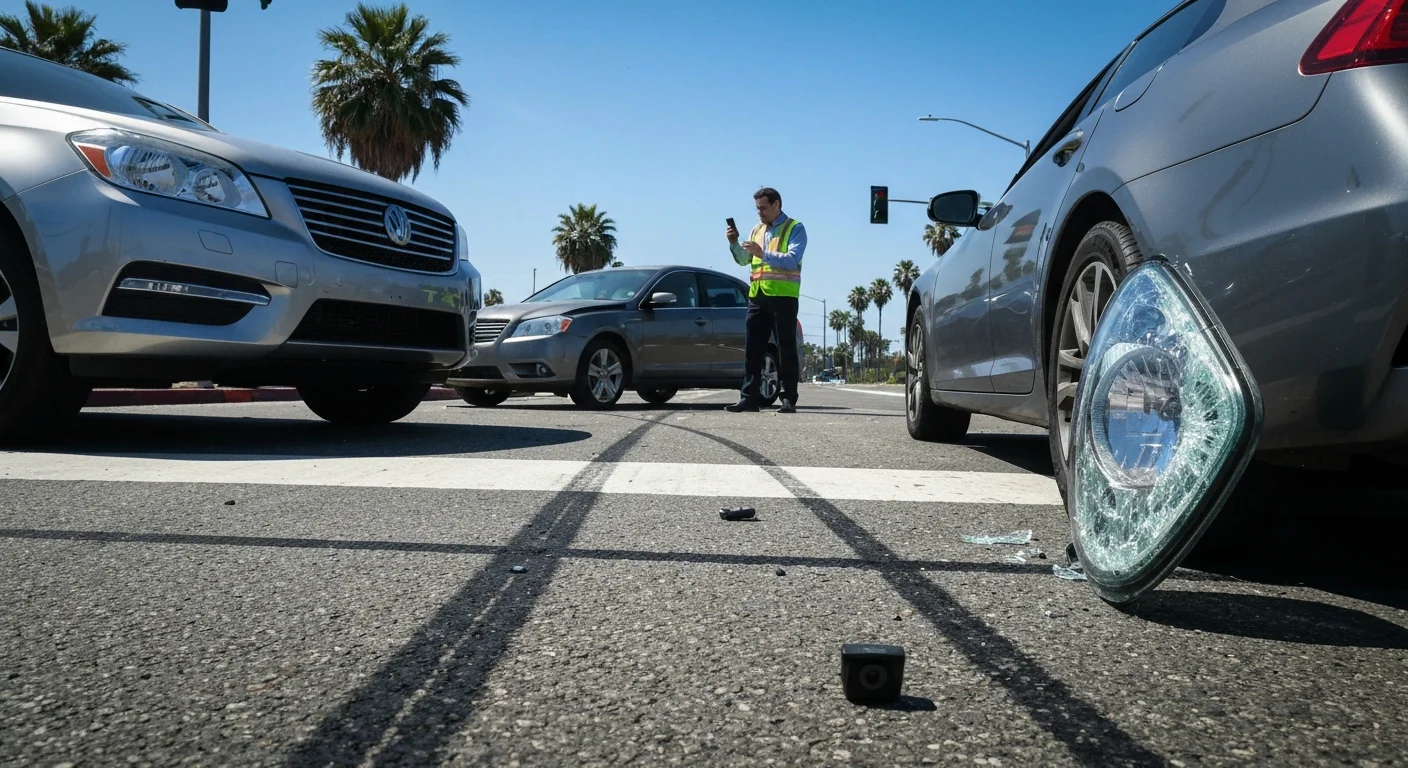
To keep your percentage of liability as low as possible, you must present compelling proof of the other driver’s negligence. You cannot rely on verbal arguments or assumptions. Gathering clear, objective evidence is the only way to convince insurance adjusters or a jury of what actually happened.
An attorney will systematically gather and analyze essential evidence to support your claim. This ensures your side of the story is backed by facts. To build a strong case, you should secure the following pieces of evidence as soon as possible after the crash:
- The Official Police Report: Law enforcement officers write detailed descriptions, draw diagrams, and sometimes state who they believe violated traffic laws.
- Photos and Videos: Take clear photos of the vehicle damage, skid marks, road conditions, traffic signs, and your physical injuries.
- Witness Statements: Unbiased third-party witnesses provide highly credible accounts of how the collision occurred.
- Dashcam and Surveillance Footage: Video recordings from nearby business security cameras or vehicle dashcams provide indisputable proof of the crash.
- Black Box Data: Modern vehicles contain Event Data Recorders that log speed, braking, and steering inputs immediately before an impact.
- Cell Phone Records: These records can prove if the other driver was texting or talking on their phone at the moment of the crash.
Common Pitfalls to Avoid When Shared Fault is Suspected
Avoiding critical errors immediately after an accident is just as important as gathering evidence. Many injury victims unintentionally damage their claims before they ever speak with an attorney. The first major mistake is apologizing or admitting any fault at the crash scene. Even a simple “I am sorry” can be used by insurance companies as an admission of liability.
Another common mistake is delaying medical evaluation. You must seek medical attention immediately, even if you feel fine. Some serious injuries do not show symptoms right away. If you delay care, insurance companies will argue that your injuries were caused by an unrelated event or that they are not as severe as you claim. This can result in them assigning a higher percentage of fault to you for failing to mitigate your damages.
Finally, never agree to give a recorded statement to the other driver’s insurance company without your attorney present. Adjusters are trained to ask misleading questions designed to trip you up. Settling too quickly is also a major risk. While minor soft tissue injuries might settle for $5,000 to $20,000, severe injuries can cost $250,000 to over $1,000,000 in long-term care. Signing a quick release means you forfeit your right to seek additional compensation if your medical needs turn out to be worse than expected.
How a California Personal Injury Attorney Protects Your Claim
Protecting your financial future after a shared-fault accident requires professional legal advocacy. The legal team at the Law Office of Brent D. Rawlings specializes in helping victims navigate the complexities of California’s comparative negligence laws. We understand how insurance companies operate, and we know how to dismantle their arguments to protect your compensation.
When you trust us with your case, we immediately launch an independent investigation. We work with accident reconstruction experts, analyze vehicle telematics, and interview witnesses to build a solid foundation. Our goal is to minimize your percentage of fault. This directly increases the final value of your personal injury case.
We handle all negotiations with the insurance companies so you can focus on your recovery. If the insurer refuses to offer a fair settlement that reflects the true distribution of fault, we are fully prepared to take your case to court. Whether you need expert automobile and truck accident representation or guidance through a complex injury claim, we are here to advocate for you every step of the way.
FAQ
Can I still recover money if I was 90% at fault in California?
Yes, you can still recover money under California’s pure comparative negligence system. If you are found 90% at fault, you can recover 10% of your total damages from the other negligent driver. However, the other driver may also pursue you for 90% of their own damages, which is why minimizing your fault is highly critical.
How is fault determined after a multi-car accident in California?
Fault is determined by analyzing police reports, witness statements, physical evidence, and expert accident reconstruction. Insurance adjusters, attorneys, or a jury will weigh the actions of every driver involved. They then assign a specific percentage of liability to each party based on how their negligence contributed to the crash.
Will my insurance rates go up if both drivers are at fault?
Yes, your insurance rates will likely increase if you are found partially at fault for an accident in California. Under state regulations, insurance companies can increase your premiums if you are determined to be 51% or more at fault. If your fault is lower, your rates may still be affected depending on your overall driving history and policy terms.
What happens if the other driver has no insurance in a shared-fault accident?
If the other driver is uninsured, you may need to file a claim under your own Uninsured Motorist (UM) coverage. Your insurance company will step into the shoes of the at-fault driver. They will pay your damages up to your policy limits, reduced by your percentage of comparative fault.
Can a police officer determine the exact percentage of fault at the scene?
No, a responding police officer does not determine the final, exact legal percentages of fault. While their police report carries significant weight and may state who violated a traffic law, the final fault percentages are negotiated between insurance adjusters and attorneys, or decided by a judge or jury during a trial.
Is there a time limit to file a shared-fault injury claim in California?
Yes, the statute of limitations for most personal injury claims in California is two years from the date of the accident. If you fail to file a lawsuit within this period, you lose your right to seek compensation. If the accident involved a government vehicle, the filing deadline is much shorter, typically requiring a claim within six months.