
If you lost a family member due to someone else’s negligence or deliberate misconduct in California, your ability to file a wrongful death claim depends strictly on your legal relationship to the deceased. Under the California wrongful death statute (California Code of Civil Procedure Section 377.60), primary standing belongs to the surviving spouse, registered domestic partner, and children. If no direct descendants exist, surviving parents, siblings, or other legal heirs under California intestate succession laws may bring an action. For stepchildren, parents, or putative spouses who fall outside the primary line, filing requires proving financial dependency on the deceased. Immediate legal guidance helps ensure all eligible beneficiaries participate in a single consolidated lawsuit before strict filing deadlines expire. At the Law Office of Brent D. Rawlings, we guide surviving family members through these detailed legal rules to secure complete financial accountability.
Key Takeaways
- California Code of Civil Procedure Section 377.60 strictly governs who can bring a wrongful death claim in California.
- Surviving spouses, registered domestic partners, and biological or adopted children hold first priority to initiate legal action.
- Parents, siblings, stepchildren, and putative spouses can file only under specific statutory conditions or by proving financial dependency.
- The standard California statute of limitations is two years from the date of death, but claims involving government agencies require administrative filing within six months.
- A wrongful death claim compensates surviving family members for their personal losses, while a survival action recovers damages suffered by the deceased before death.
Understanding Wrongful Death Claims in California
A wrongful death occurs when a person dies as a direct result of another party’s negligence, recklessness, or intentional acts. Legally, the claim stands in place of the personal injury lawsuit the deceased individual could have filed had they survived the incident. Common scenarios leading to these lawsuits include fatal automobile and truck accidents, medical errors, dangerous workplace property conditions, and defective products.
According to safety data compiled by the Centers for Disease Control and Prevention, unintentional injury deaths exceed 220,000 annually across the United States. In California, thousands of families face sudden loss each year due to preventable crashes and hazardous conditions. The primary purpose of a wrongful death claim in California is to offer financial relief to surviving family members who relied on the deceased for financial and emotional support.
To win a civil wrongful death lawsuit, the plaintiff must prove liability by a preponderance of the evidence. This standard requires showing that the defendant owed the victim a duty of care, breached that duty, caused the fatal injury, and created quantifiable damages for the surviving family. Unlike criminal trials, which require proof beyond a reasonable doubt, civil claims focus on financial restitution for legal beneficiaries.
Who Can Bring a Wrongful Death Claim in California?
California law limits who can initiate a civil lawsuit following a fatal tragedy. You cannot file a claim simply because you were close to the victim or experienced severe grief. The California Legislature created a structured hierarchy determining who can bring a wrongful death claim based on statutory inheritance rights and financial reliance.
Primary standing automatically belongs to the victim’s immediate family. If these direct heirs exist, they hold the legal rights to file:
- Surviving Spouse: The legally recognized husband or wife at the time of death.
- Registered Domestic Partner: Partners registered with the California Secretary of State share equal legal standing with married spouses.
- Children: Biological and legally adopted children of the deceased possess equal legal standing.
When the deceased leaves behind no surviving spouse, domestic partner, or children, the right to file expands to secondary parties under California’s intestate succession rules. In these situations, the following relatives may bring an action:
- Parents: Biological or adoptive parents of the deceased.
- Siblings: Brothers and sisters, including half-siblings.
- Extended Heirs: Nieces, nephews, or grandparents who would inherit the estate under state intestate laws.
A third category applies to individuals who depended financially on the deceased person. Under Section 377.60(b), these parties can file if they prove they relied on the deceased for at least 50% of their financial support:
- Putative Spouses: A surviving partner who believed in good faith that their marriage was legally valid.
- Children of a Putative Spouse: Children raised within that relationship context.
- Stepchildren: Non-adopted children of the deceased who depended on them for food, shelter, and financial care.
- Parents of the Deceased: Parents who relied directly on the adult child for living expenses.
Wrongful Death Claim vs. Survival Action
Surviving family members often confuse a wrongful death lawsuit with a survival action. Although both claims stem from the same tragic event, they serve distinct legal functions and award different types of compensation under California law. Understanding the differences prevents costly procedural errors during litigation.
A wrongful death lawsuit belongs directly to the surviving heirs. It compensates the family for the economic and emotional harm they personally endure due to the loss. In contrast, a survival action (governed by California Code of Civil Procedure Section 377.30) belongs to the deceased victim’s estate. It recovers damages the victim suffered from the moment of injury up until their death, such as medical costs and lost wages. Knowing what evidence you need for a personal injury claim helps establish both claims effectively.
The following table outlines the key legal differences between these two civil actions in California courts:
| Feature | California Wrongful Death Action | California Survival Action |
|---|---|---|
| Legal Basis | California Code of Civil Procedure 377.60 | California Code of Civil Procedure 377.30 |
| Who Receives Compensation? | Surviving legal heirs (Spouse, Children, Parents) | The deceased person’s estate (Distributed via Will/Intestate law) |
| Recoverable Losses | Loss of future income, loss of companionship, burial costs | Pre-death medical bills, lost wages before death, punitive damages |
| Pain and Suffering | Calculated based on emotional loss to surviving heirs | Calculated for the victim’s pre-death pain (Allowed under Assembly Bill 35) |
What Damages Can You Recover in a Wrongful Death Case?
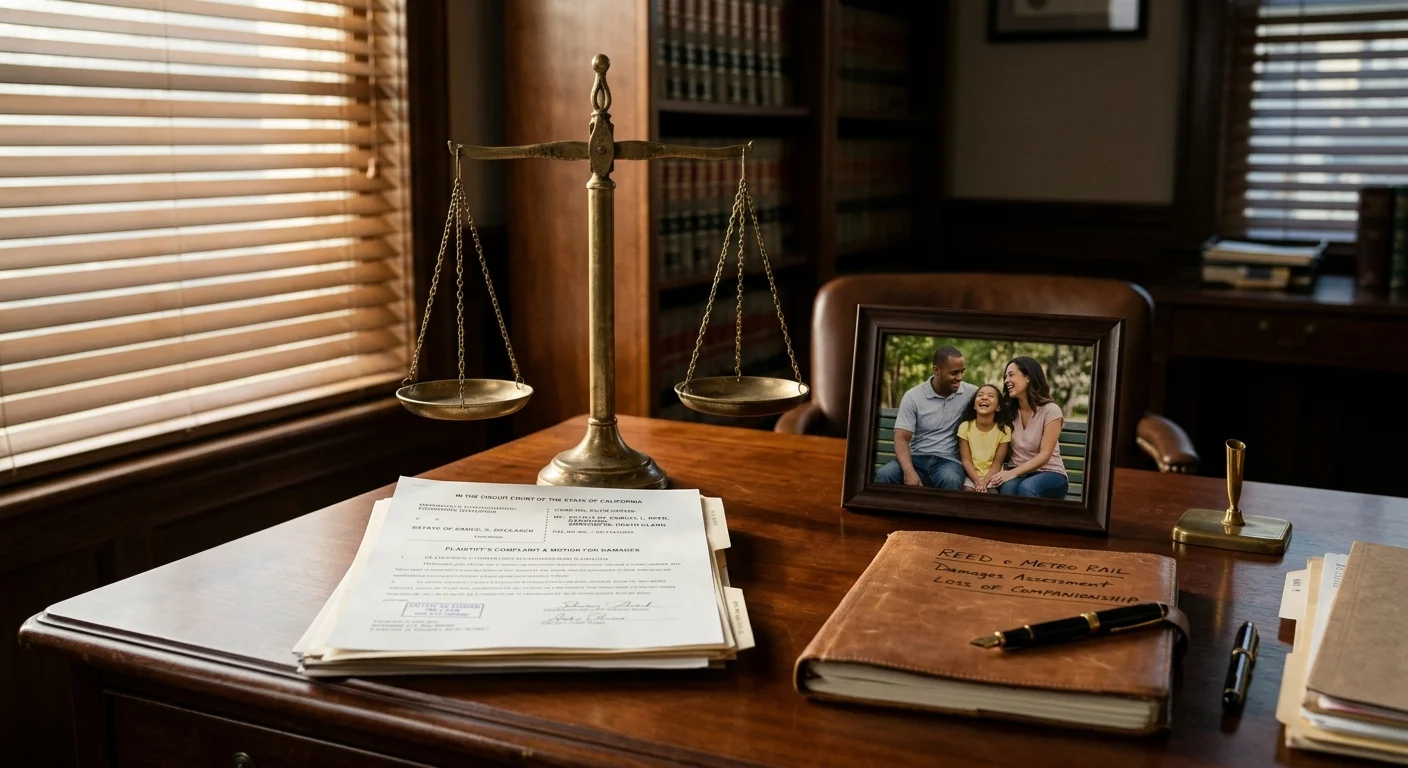
Compensation in a California wrongful death claim is divided into economic and non-economic damages. Courts measure these losses by examining the victim’s age, life expectancy, earning capacity, health status, and household contributions prior to the incident.
Economic damages reimburse measurable financial losses sustained by the surviving family members. These typically include:
- Financial support the deceased would have provided to the family over their expected lifetime.
- Loss of employment benefits, pension plans, health insurance, and 401(k) contributions.
- Reasonable funeral and burial expenses, which often range from $8,000 to $15,000 or more in urban California markets.
- The financial value of household services the deceased performed, such as childcare, home maintenance, and eldercare.
Non-economic damages compensate for profound emotional harm and quality-of-life changes. Unlike some states, California does not impose arbitrary statutory caps on non-economic damages in standard personal injury or wrongful death cases, except in medical malpractice matters governed by MICRA laws. Non-economic damages compensate for:
- Loss of love, companionship, comfort, affection, and emotional support.
- Loss of marital relations, intimacy, and protection for a surviving spouse or domestic partner.
- Loss of parental guidance, training, and moral instruction for surviving children.
According to crash statistics from the National Highway Traffic Safety Administration, fatal traffic accidents cause billions of dollars in societal economic damages every year. While money cannot replace a loved one, full financial recovery helps families maintain stability, pay mortgage obligations, and fund higher education for surviving children.
Statute of Limitations for California Wrongful Death Claims
California enforces strict deadlines for filing legal actions. Under California Code of Civil Procedure Section 335.1, surviving family members must file a wrongful death lawsuit within two years of the date of death. If you miss this statutory deadline, the court will dismiss your lawsuit, permanently barring your financial recovery.
However, important exceptions can shorten or lengthen this timeframe. The most critical exception involves government entities. If a fatal crash involved a city bus, public utility vehicle, poorly designed road, or government worker, the case falls under the California Government Claims Act. In these situations, you must submit a formal administrative claim within six months of the fatal incident before filing a lawsuit.
Another major exception involves medical malpractice. Under California Code of Civil Procedure Section 340.5, medical negligence actions must be filed within three years of the injury date or one year after the plaintiff discovers (or should have discovered) the injury, whichever occurs first. Consulting an attorney immediately prevents missing these hidden deadlines.
Step-by-Step Process for Filing a California Wrongful Death Claim

Pursuing a legal action requires strict adherence to California civil litigation procedures. Navigating this process demands thorough investigation, expert financial analysis, and skilled negotiation.
- Consult a Personal Injury Lawyer: Meet with a qualified attorney to verify standing under California wrongful death statute rules and assess case viability.
- Investigate and Evidence Collection: Gather crash reports, witness records, medical records, employment documentation, and expert accident reconstructions.
- Identify All Legal Beneficiaries: California follows the “One Action Rule,” meaning all legal heirs must join a single consolidated lawsuit to avoid duplicate claims against defendants.
- Calculate Total Economic Damages: Work with forensic economists to project lost future wages, inflation rates, and lifetime benefits. Reviewing a guide on evaluating what a personal injury case is worth helps build realistic expectations.
- Submit a Demand Letter: Draft a legal demand package to the insurance provider outlining liability, evidence, and exact financial demands.
- File the Formal Complaint: If insurance negotiations fail, file a civil complaint in the appropriate California Superior Court before the statute of limitations expires.
- Navigate Discovery and Mediation: Exchange evidence, depose witnesses, and attempt court-ordered mediation to settle the matter before trial.
- Proceed to Jury Trial: Present arguments and testimony before a California judge and jury to secure a binding verdict if settlement offers remain unreasonable.
Common Mistakes to Avoid in California Wrongful Death Claims

Navigating the legal process while grieving a severe loss creates tremendous stress. Families frequently make critical errors that compromise their legal rights or drastically diminish their settlement value. An expert practitioner understands how defense insurance adjusters attempt to minimize corporate liabilities after fatal accidents.
A common mistake is settling early with an insurance adjuster before knowing the full long-term financial impact of the loss. Insurance companies often offer fast initial settlements that cover basic funeral costs but fail to address decades of lost future earnings. Once you sign a liability release form, you forfeit all rights to seek further compensation from that party.
Another frequent mistake involves failing to join all eligible statutory heirs in the lawsuit. Under California’s “One Action Rule,” defendants cannot be forced to defend multiple individual wrongful death lawsuits brought by different family members. If one legal heir files without notifying or including other statutory beneficiaries, the omitted heirs may lose their ability to seek recovery or may be forced to litigate directly against the filing party.
Data from the California Department of Public Health emphasizes that occupational, vehicular, and accidental injury rates vary widely across California counties. Preserving crucial physical evidence, obtaining corporate maintenance logs, and securing witness testimony within days of an accident remains the single most effective way to establish fault and combat insurance defense strategies.
Frequently Asked Questions
What is considered a wrongful death claim in California?
A wrongful death claim in California is a civil lawsuit filed by surviving family members when an individual dies due to another person or entity’s negligent, reckless, or intentional behavior. It seeks financial compensation for the emotional and financial harms suffered by the surviving heirs.
Who can file a wrongful death lawsuit if there is no spouse or child?
If the deceased left no surviving spouse, domestic partner, or children, California law allows surviving parents, siblings, or extended family members who would inherit under California’s intestate succession laws to file the lawsuit.
Can stepchildren bring a wrongful death claim in California?
Stepchildren can file a wrongful death claim in California if they can demonstrate that they depended on the deceased step-parent for at least 50% of their financial support at the time of death.
How long do you have to bring a wrongful death claim in California?
The standard statute of limitations is two years from the date of the person’s death. However, if the lawsuit involves a government agency or public employee, a formal administrative claim must be filed within six months of the incident.
How are wrongful death settlement proceeds divided among family members?
Surviving heirs can agree among themselves on how to divide the settlement proceeds. If beneficiaries cannot reach an agreement, the trial court judge will determine fair distribution based on each individual’s proven financial reliance and emotional loss.
Can you sue for pain and suffering in a California wrongful death claim?
Yes. Surviving family members can recover non-economic damages for their own emotional suffering, loss of guidance, and loss of companionship. Additionally, under California law, survival actions now permit estates to recover pre-death pain and suffering experienced by the victim.