


If you or a loved one suffered an auto accident head injury, prioritize an immediate emergency medical evaluation—including CT or MRI diagnostic imaging—within 24 hours of the collision, even if you feel completely fine. High-impact motor vehicle crashes transfer massive kinetic energy that causes your brain to violently strike the interior of your skull, leading to hidden internal bleeding, brain contusions, or micro-tearing of neural tissue. For mild concussions, strict cognitive rest and specialist monitoring are critical, whereas moderate to severe brain trauma requires immediate neurosurgical intervention and ongoing rehabilitation care. From a legal standpoint, obtaining an immediate medical assessment creates an unbroken timeline of evidence that prevents insurance companies from claiming your injuries were pre-existing or unrelated to the crash. Before speaking with opposing insurance adjusters or signing quick liability waivers, consult a knowledgeable legal advocate to safeguard your rights and calculate the full, long-term lifetime financial impact of your injury.
Key Takeaways
- Immediate emergency medical care is vital because brain injury symptoms are frequently masked by post-crash shock and adrenaline.
- Brain damage like coup-contrecoup contusions and diffuse axonal tearing can occur without direct scalp impact or visible external cuts.
- Diagnostic imaging and acute care costs range from $500 for outpatient scans to well over $100,000 for emergency neurosurgical treatment.
- Recovering comprehensive compensation requires documenting physical, cognitive, emotional, and long-term vocational impacts.
- Consulting an experienced legal representative prevents insurance adjusters from using delayed treatment timelines to lower payout values.
Understanding Auto Accident Head Injury Mechanics
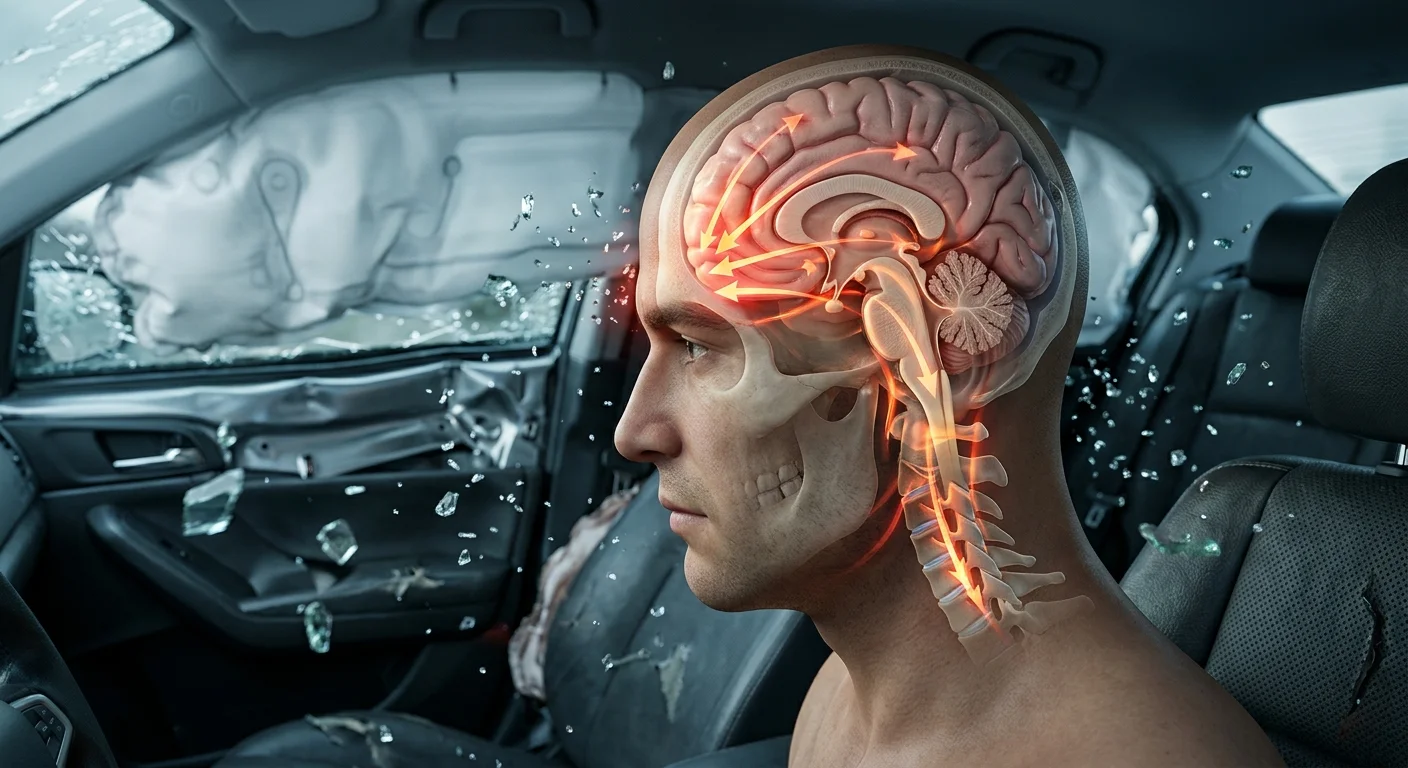
An auto accident head injury occurs when rapid acceleration, sudden deceleration, or direct blunt impact forces soft brain tissue against the hard interior surface of the skull. During a collision, your motor vehicle comes to a complete halt within milliseconds. However, your body and internal organs continue moving forward at the vehicle’s pre-impact speed until acted upon by seatbelts, interior cabin structures, or severe physical forces. This rapid change in velocity generates kinetic energy that impacts delicate neurological structures.
Traumatic brain injuries in motor vehicle collisions generally result from two primary physical mechanisms:
- Direct Impact Trauma: This occurs when an occupant’s head strikes internal vehicle structures such as the steering wheel, side window, door frame, or dashboard, causing localized skull fractures and focal brain contusions.
- Rotational and Inertial Acceleration: This occurs without direct physical impact to the scalp. Violent whiplash sloshes the brain back and forth inside the skull vault, stretching and snapping delicate nerve fibers.
Severe non-impact head trauma frequently leads to coup-contrecoup injuries, where tissue damage occurs both at the point of initial internal impact and on the exact opposite side of the brain. Violent rotational motions can also cause diffuse axonal injury, which tears nerve axons throughout deep brain tissue. According to clinical data published by the American Association of Neurological Surgeons, motor vehicle crashes are a leading cause of severe traumatic brain injuries requiring immediate neurosurgical care.
Recognizing Early and Delayed Symptoms of Car Accident Brain Injury
Identifying a car accident brain injury requires monitoring immediate physical symptoms while carefully observing subtle behavioral changes over subsequent weeks. Motor vehicle collisions release intense adrenaline and shock, which temporarily obscure neurological discomfort and cognitive confusion. As internal swelling or fluid accumulation develops around brain tissue, initially mild symptoms often escalate into severe health complications.
Neurological symptoms generally present across four main operational categories:
- Physical Symptoms: Persistent or worsening headaches, dizziness, loss of balance, nausea, repeated vomiting, fatigue, and clear fluid draining from the nose or ears.
- Cognitive Deficits: Short-term memory loss, mental confusion, difficulty concentrating, slowed speech, and trouble processing simple instructions.
- Sensory Disturbances: Blurred vision, ringing in the ears (tinnitus), metallic tastes, and extreme sensitivity to bright light or loud sounds.
- Emotional and Mood Changes: Unexplained irritability, sudden severe anxiety, clinical depression, emotional outbursts, and unusual sleep disruptions.
If you notice persistent headaches or cognitive fog in the days following a collision, schedule a comprehensive evaluation with a neurologist immediately. Initial emergency diagnostic imaging ranges from $500 to $3,500 for specialized outpatient scans, while intensive hospital care can rapidly exceed $20,000 per day. Securing early diagnostic proof is critical to protecting your health and preserving your legal claim. You can review our dedicated legal guide on what evidence do you need for a personal injury claim to see how medical records bolster your recovery process.
Types and Severity Levels of Traumatic Brain Injury from a Car Accident
A traumatic brain injury car accident case is categorized clinically as mild, moderate, or severe based on diagnostic imaging, clinical evaluations, and the duration of unconsciousness. Medical professionals rely on standardized tools like the Glasgow Coma Scale (GCS) to assess neurological responsiveness and forecast long-term recovery requirements.
Medical professionals classify crash-induced head trauma into three primary categories:
- Mild TBI (Concussion): Involves loss of consciousness under 30 minutes or a state of being dazed and disoriented. While labeled mild, concussions can cause post-concussion syndrome lasting for months.
- Moderate TBI: Involves unconsciousness lasting from 30 minutes to 24 hours, clear neurological deficits on CT or MRI scans, and persistent cognitive challenges requiring rehabilitation therapy.
- Severe TBI: Characterized by loss of consciousness exceeding 24 hours or prolonged coma, extensive structural brain tissue damage, and permanent cognitive or motor impairments.
The table below highlights the distinctions, diagnostic expense ranges, and potential legal recovery categories associated with each clinical severity level:
| TBI Severity Level | Primary Clinical Indicators | Typical Medical & Treatment Costs | Potential Claim Recovery Impact |
|---|---|---|---|
| Mild TBI (Concussion) | Brief confusion, temporary memory loss, headaches, light sensitivity | $1,500 – $15,000 (ER visits, CT scan, physical rest therapy) | Covers medical bills, short-term lost income, moderate pain & suffering |
| Moderate TBI | Unconsciousness up to 24 hours, motor impairment, persistent confusion | $25,000 – $150,000 (Hospital stays, MRI scans, rehab sessions) | Covers extensive care, career retraining, prolonged lost wages |
| Severe TBI | Coma lasting over 24 hours, skull fractures, permanent memory loss | $100,000 – $1,000,000+ (Neurosurgery, ICU, assisted living) | Covers lifetime medical care, full loss of earning capacity, profound disability |
| Catastrophic Brain Trauma | Penetrating head wound, severe tissue loss, permanent total dependence | $500,000 – $3,000,000+ (Lifetime 24/7 nursing care and support) | Maximum multi-million dollar recoveries for lifelong specialized care |
Immediate Steps to Take for a TBI After Car Accident

Managing a tbi after car accident requires following structured medical and legal steps to protect your physical health and preserve your financial rights. Taking immediate, methodical action ensures that every element of your injury and financial loss is accurately recorded.
- Seek Emergency Medical Assessment: Transport directly to an emergency department. Request formal neurological evaluations, including CT or MRI scans, to identify internal hemorrhaging or tissue swelling.
- Follow Recommended Specialist Treatment Plans: Attend every scheduled therapy appointment with neurologists, neuropsychologists, and physical therapists. Unexplained gaps in treatment allow insurance companies to dispute injury severity.
- Maintain a Detailed Symptom Diary: Write down daily physical pain levels, cognitive struggles, emotional mood shifts, and sleep difficulties. Real-time entries serve as compelling evidence of non-economic pain and suffering.
- Decline Early Settlement Offers: Refuse to give recorded insurance statements or sign liability release forms before receiving a clear long-term prognosis from your medical team.
- Consult an Experienced Injury Lawyer: Retain a skilled attorney who can hire medical experts, vocational consultants, and life-care planners to calculate the true value of your legal claim.
Calculating Financial and Personal Costs of Brain Trauma
Determining the financial cost of a traumatic brain injury requires calculating immediate emergency room bills along with decades of specialized medical treatment, home modifications, and lost earning capacity. According to official data from the Centers for Disease Control and Prevention (CDC), motor vehicle collisions represent one of the top causes of TBI-related hospitalizations nationwide. Patients suffering from catastrophic brain trauma face estimated lifetime medical and support expenses exceeding $3,000,000.
Beyond tangible financial bills, head injury victims suffer profound non-economic losses. Diminished quality of life, loss of relationship intimacy, emotional distress, and chronic physical pain form significant portions of full legal financial recovery. When brain damage prevents an injured individual from returning to their former career, securing comprehensive advocacy from a catastrophic injury lawyer becomes necessary to demand compensation for prospective lifetime wage losses.
Common Legal Mistakes to Avoid in California TBI Claims

Navigating a complex brain injury claim in California requires avoiding tactical errors that insurance companies exploit to reduce cash payouts. One major mistake injury victims make is delaying specialized medical care after a collision. Insurance claims adjusters regularly use gaps in medical care to argue that head trauma was caused by an unrelated event or that the victim failed to seek appropriate care.
Another dangerous mistake involves settling a claim before reaching Maximum Medical Improvement (MMI). Brain tissue heals slowly, and predicting long-term cognitive deficits during the first few months is virtually impossible. Settling prematurely forfeits your legal right to claim additional money if you require ongoing care years later.
Additionally, safety reports from the National Highway Traffic Safety Administration (NHTSA) demonstrate how vehicle crashworthiness failures—such as defective airbag deployment or weak roof structures—can amplify head injuries during rollovers. An experienced attorney investigates whether auto structural defects contributed to the injury, expanding your financial recovery beyond basic driver liability insurance limits. You can explore our guide on how much is my personal injury case worth to understand how legal damages are calculated.
FAQ
What are the first signs of a brain injury after a car crash?
The earliest signs of a brain injury include sudden dizziness, persistent headaches, confusion, nausea, light sensitivity, and brief loss of consciousness. Victims may also experience slurred speech or unsteadiness when walking. Emergency medical testing should be performed immediately to rule out internal brain bleeding.
How long after an accident can brain injury symptoms appear?
While some symptoms appear immediately, delayed brain injury symptoms can take several days or even weeks to become noticeable. Cognitive issues like short-term memory loss, mood swings, depression, and severe fatigue often surface only as crash victims attempt to return to their normal work and home routines.
Can you get a traumatic brain injury without hitting your head?
Yes, you can sustain a traumatic brain injury without striking your scalp against an object. Rapid acceleration and deceleration whiplash forces cause the brain to collide violently against the inside of the skull. This motion stretches nerve fibers and causes internal bruising known as a coup-contrecoup or diffuse axonal injury.
How much compensation can you receive for a car accident head injury?
Compensation amounts depend on injury severity, total medical expenses, long-term care needs, and impact on wage-earning potential. Mild concussion claims may settle for tens of thousands of dollars, whereas moderate-to-severe traumatic brain injuries involving permanent cognitive disability frequently result in settlements ranging from $1,000,000 to over $10,000,000.
Is a concussion considered a traumatic brain injury?
Yes, a concussion is clinically classified as a mild traumatic brain injury (mTBI). Although categorized as mild compared to open skull fractures, concussions can still produce long-lasting physical, cognitive, and emotional complications known as post-concussion syndrome.
When should you contact a personal injury lawyer after a head injury?
You should contact a personal injury lawyer as soon as initial emergency medical care is stabilized and before speaking to opposing insurance representatives. A lawyer preserves critical crash evidence, manages communication with insurance adjusters, and coordinates with medical experts to calculate your full long-term financial damages.
