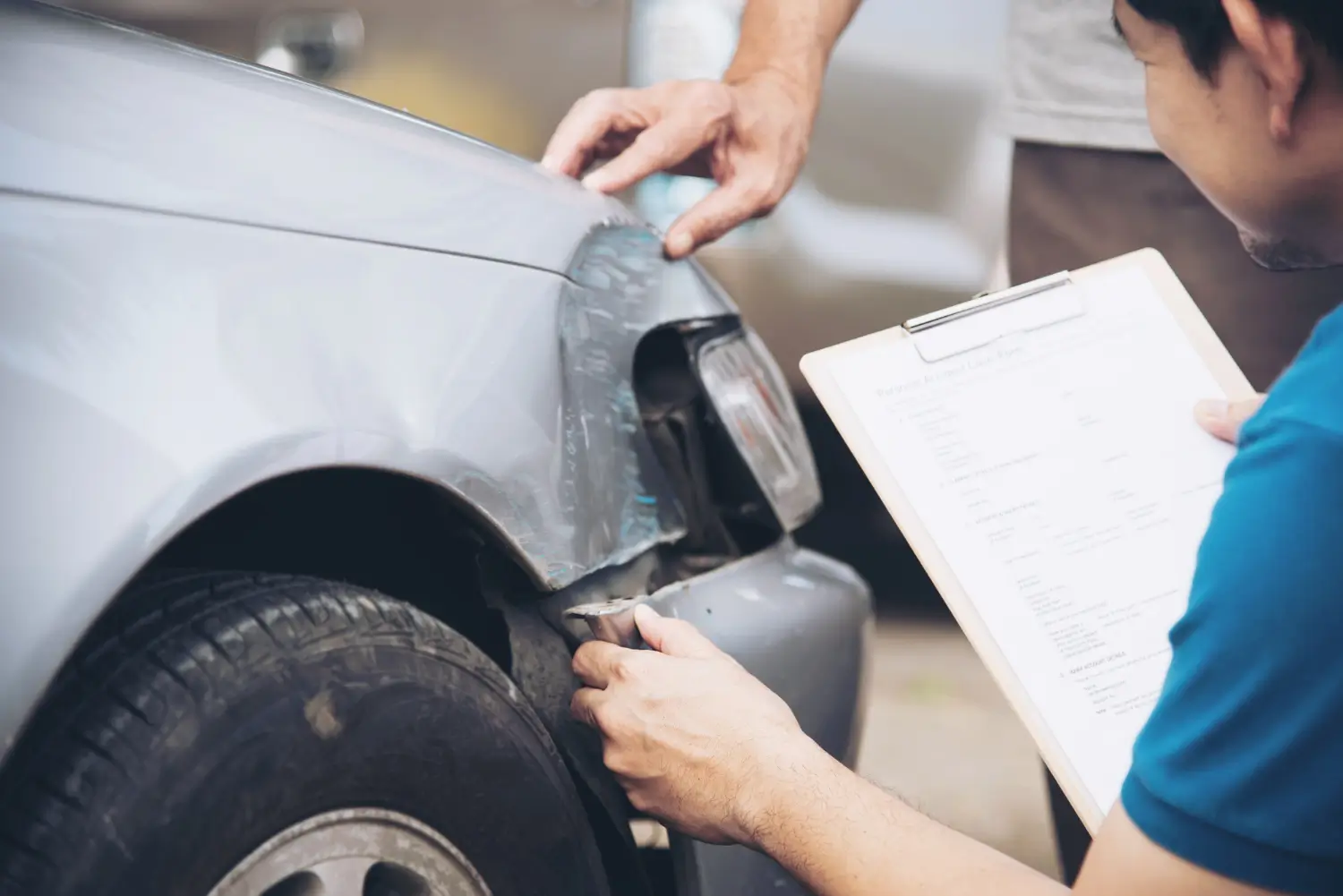
For drivers involved in a collision in California, establishing liability quickly and accurately is the single most important step in protecting their financial future. If you are entirely innocent, your goal is to secure full compensation from the other driver’s insurance carrier. If you share partial responsibility, you must minimize your liability percentage to avoid losing a massive portion of your payout. We recommend immediately securing physical evidence at the scene, avoiding any apologies to the other driver, and obtaining a copy of the police report. Working with an experienced automobile and truck accident lawyer ensures that insurance companies do not use unfair tactics to shift the blame onto you. This comprehensive guide details the legal mechanics, investigative steps, and evidence required to prove liability after a collision.
Key Takeaways
- California operates under a pure comparative negligence system, meaning you can recover damages even if you are 99% at fault, though your payout will be reduced by your percentage of blame.
- Police reports are highly influential but not the final word; insurance adjusters and civil courts make the ultimate determination of legal liability.
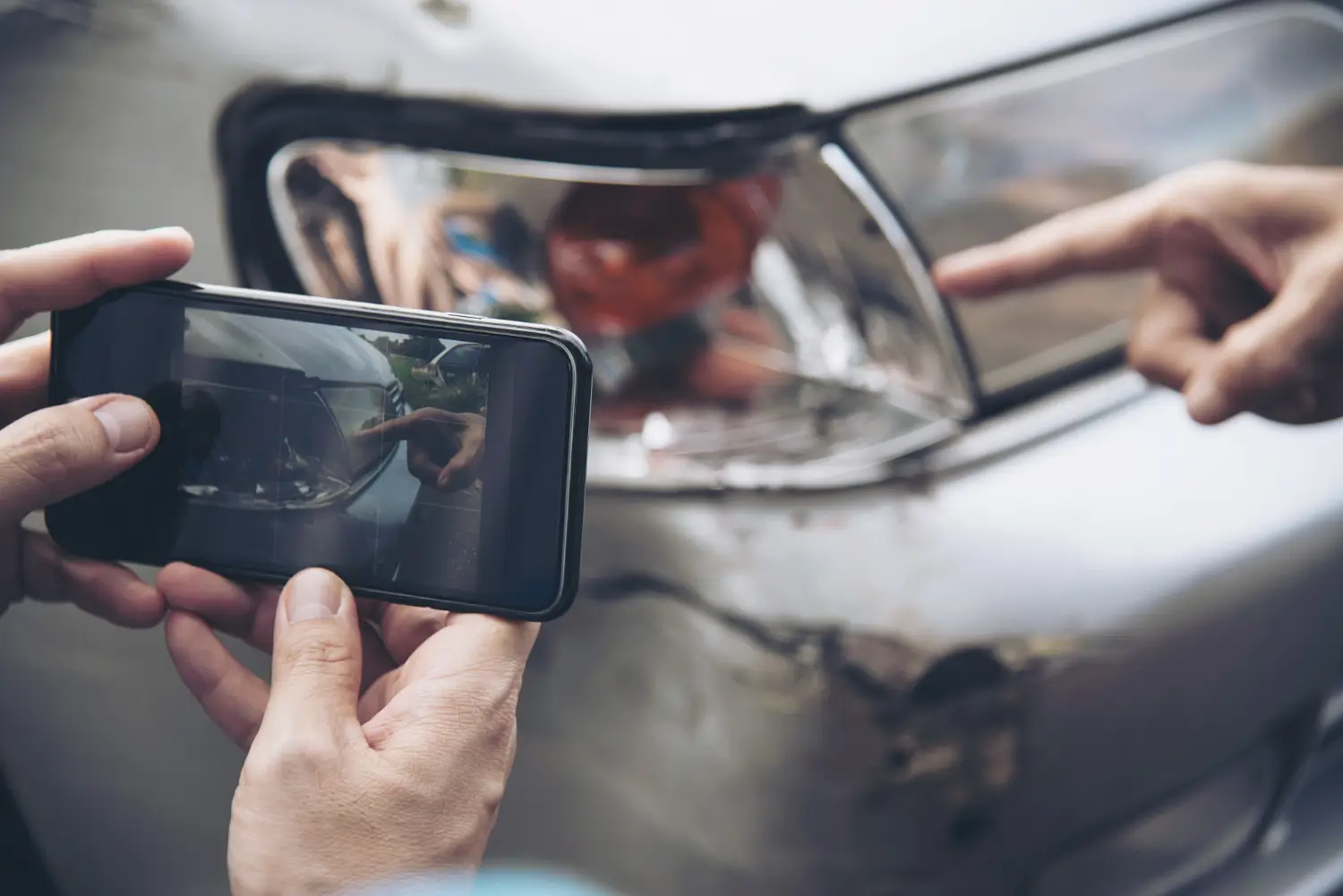
- Physical evidence, such as dashcam footage, black box data, and skid marks, provides objective proof that verbal statements cannot easily overturn.
- Apologizing or admitting fault at the accident scene is a major professional mistake that can severely damage your personal injury claim.
How to Determine Fault in a Car Accident: The Legal Framework in California
Proving liability in a California at-fault accident requires establishing negligence under state law. California Civil Code Section 1714 dictates that everyone is responsible for injury caused to another by their want of ordinary care or skill. To establish negligence, you must prove that the other driver owed you a duty of care, breached that duty, directly caused the accident, and caused you to suffer actual damages.
Every driver on California roads owes a duty of care to operate their vehicle safely. Breaching this duty includes behaviors like speeding, running red lights, or driving while distracted. According to data from the California Office of Traffic Safety, over 200,000 injury-producing motor vehicle crashes occur annually across the state, with the vast majority stemming from clear breaches of this duty of care. When a breach occurs, the negligent driver becomes legally liable for the resulting physical and financial damages.
Unlike some states that use modified comparative negligence rules, California uses a pure comparative negligence model. This means that even if you are determined to be 90% responsible for a collision, you can still legally recover 10% of your total damages from the other driver. Conversely, if you are 10% at fault and your total damages are $100,000, your final recovery will be reduced to $90,000. Because every percentage point of fault directly translates to thousands of dollars lost, insurance adjusters fight hard to assign as much blame to you as possible.
Who Decides Who Is at Fault in a Car Accident?
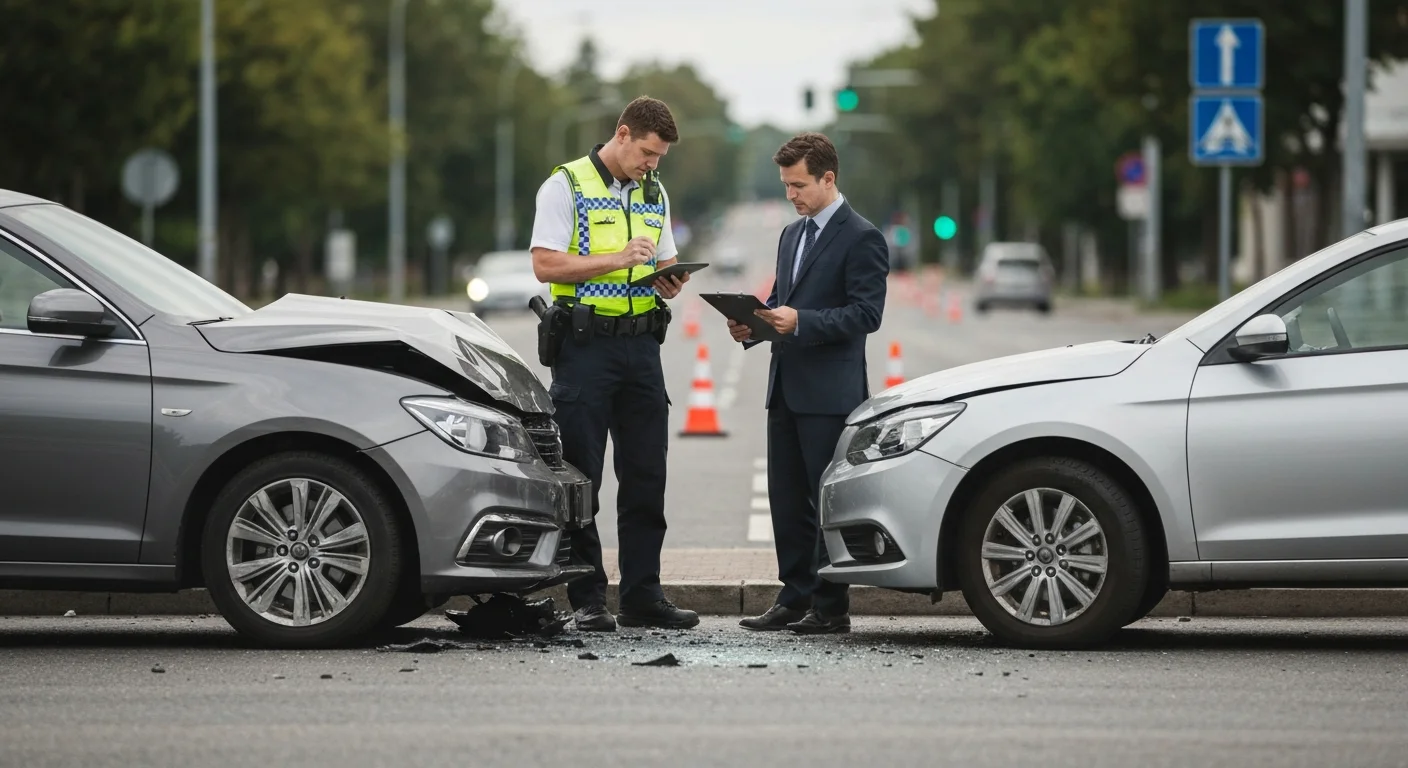
Determining liability is not the job of a single entity. Instead, it is a multi-step process involving police officers, insurance claims adjusters, and sometimes judges or juries. Each party evaluates the collision from a different perspective and with different legal standards in mind.
The process typically begins with the responding law enforcement officer. The officer writes an official police report, notes traffic violations, and sometimes shares an opinion on who caused the crash. While these reports carry immense weight during insurance negotiations, they are not always admissible as absolute proof in a civil court of law. Insurance adjusters then conduct their own independent investigations to protect their companies’ financial interests. They review the report, inspect vehicle damage, interview witnesses, and make a settlement offer based on their assessment of fault.
If the insurance companies cannot agree on liability, or if the injured party rejects a lowball settlement offer, the case moves to civil court. In a trial, a neutral judge or jury reviews the evidence and makes the final, legally binding determination of fault. As an industry best practice, you should never assume an adjuster’s initial decision is final. You have the absolute right to challenge their findings with the help of a qualified legal advocate.
Step-by-Step: How to Tell Who Is at Fault in a Car Accident
Identifying the liable party requires a systematic review of the physical, digital, and testimonial evidence left behind. You can systematically analyze liability by following this specific sequence of steps:
- Analyze the Point of Impact: Examine where the vehicles damaged each other. Rear-end damage almost always points to the trailing driver, while side-impact damage indicates a failure to yield.
- Review Local Traffic Laws: Check the California Vehicle Code for specific violations. If a driver violated a statute, such as failing to signal or speeding, they are often presumed negligent under the doctrine of negligence per se.
- Examine the Scene’s Physical Geometry: Look at skid marks, debris fields, and the final resting positions of the vehicles. Debris is usually thrown in the direction of the impact force.
- Evaluate Digital Surveillance: Seek out dashcam footage, nearby business security cameras, or municipal traffic camera recordings that captured the crash in real-time.
By compiling these elements, you build a clear, evidence-based narrative of the collision. This prevents the other driver’s insurance provider from changing the story or claiming that you were the one who caused the crash.
Essential Evidence Used in Determining Fault in a Car Accident
Objective physical proof is always more reliable than human memory. Immediately after a collision, gathering and preserving physical evidence is critical to protecting your rights. Having concrete proof makes it incredibly difficult for insurance adjusters to deny your claim.
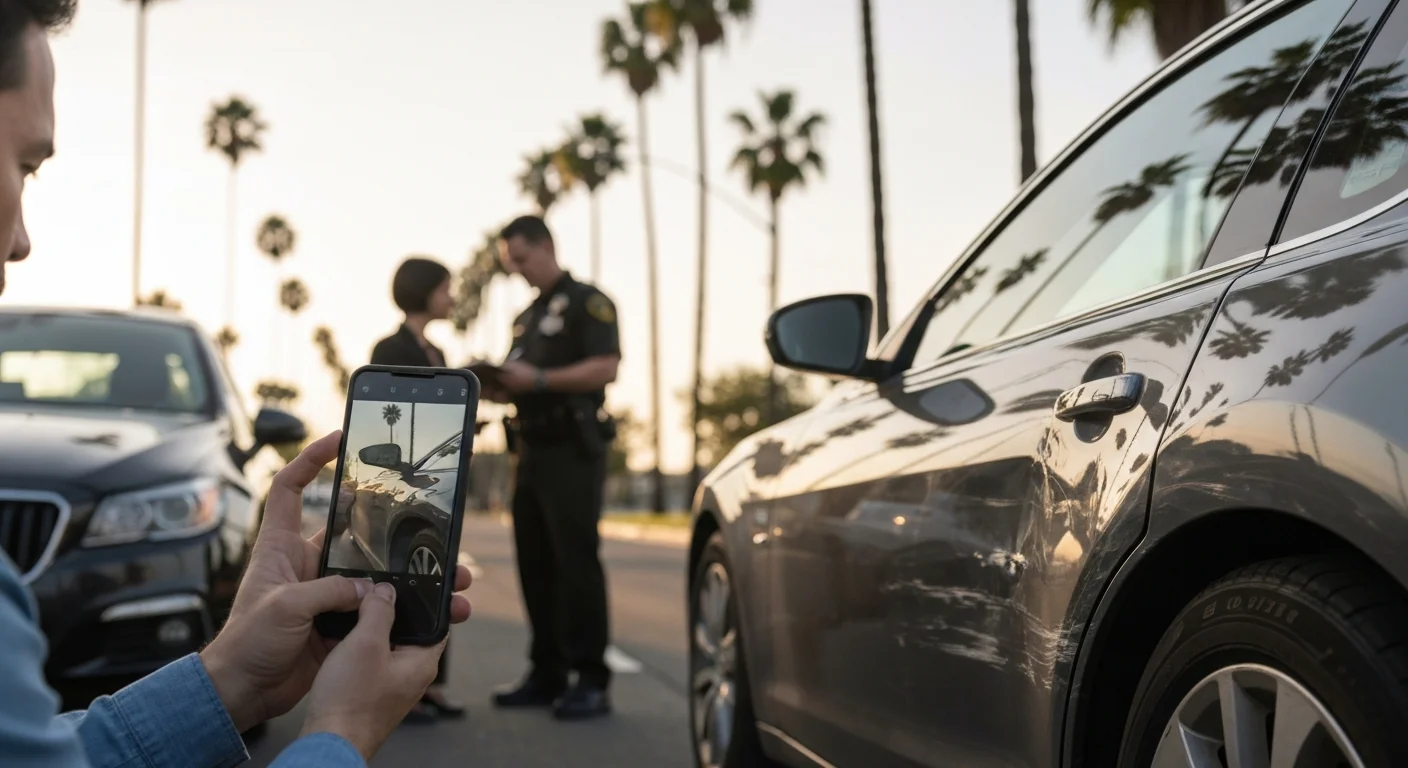
The most persuasive forms of evidence include comprehensive photography of the scene, witness statements, and vehicle electronic data. Take wide-angle photos of the entire intersection or road segment, close-up shots of the vehicle damage, and photos of any temporary road hazards or obscured traffic signs. Additionally, obtain contact information from neutral bystanders who saw the crash occur. Their statements carry far more weight than those of the drivers involved. If you are unsure of what to gather, reading about evidence you need for a personal injury claim can give you a clear advantage.
For serious collisions, hiring an accident reconstruction expert is highly beneficial. These professionals use computer simulations, physics, and vehicle black box data to recreate the crash. A comprehensive reconstruction report typically costs between $1,500 and $5,000, depending on the complexity of the crash. However, this investment can save you tens of thousands of dollars by clearly proving you were not at fault. Our firm regularly collaborates with top-tier reconstruction experts to build undeniable cases for our clients.
Common Accident Scenarios and Fault Distributions
While every collision is unique, certain common accident scenarios have established baselines for liability. Understanding these patterns helps you anticipate how insurance adjusters will view your case.
In rear-end collisions, the trailing driver is almost always found at fault. California drivers must maintain a safe following distance under all road conditions. However, exceptions exist if the front driver reversed unexpectedly or had broken brake lights at night. In left-turn accidents, the driver making the turn is typically liable because oncoming traffic has the right-of-way. This presumption only changes if the oncoming vehicle was speeding excessively or ran a red light. The table below outlines how liability is commonly split across these common scenarios.
| Collision Type | Typical Fault Allocation | Key Deciding Evidence | Common Defenses Used |
|---|---|---|---|
| Rear-End Collision | Trailing driver (90% to 100% at fault) | Point of impact, dashcam footage, brake light functionality | Sudden stopping, cut-offs, brake failure |
| Left-Turn Collision | Turning driver (80% to 100% at fault) | Traffic light phases, speed analysis of oncoming vehicle | Oncoming vehicle was speeding or ran a red light |
| T-Bone / Intersection | Driver who violated right-of-way (100% at fault) | Eyewitness testimony, traffic signal camera records | Claiming they had the green light or green arrow |
| Sideswipe / Lane Change | Driver merging or changing lanes (100% at fault) | Blind-spot monitoring data, road paint markings, impact angle | The other driver accelerated to block the lane change |
The Financial and Legal Impact of a California At-Fault Accident
Being found liable for a collision in California has major financial consequences that can impact you for years. If you are determined to be at fault, your auto insurance premiums will rise, and you may be held personally liable for damages that exceed your policy limits.
According to research published by the Insurance Information Institute, an at-fault accident in California can increase your annual insurance premiums by 30% to 45%. This usually translates to an extra $300 to $800 per year in insurance costs, lasting for at least three to five years. If the injuries you caused are severe, medical bills can quickly exceed California’s minimum liability limit of $15,000 per person. Serious injuries, such as spinal damage or traumatic brain injuries, regularly incur medical costs ranging from $10,000 to over $100,000. In these cases, the injured party can pursue your personal assets to cover the difference.
To avoid these devastating financial outcomes, you must build a strong case to defend your innocence. Even if you believe you were partly to blame, you should never navigate this process alone. You should always consider whether to get a lawyer for a car accident that wasn’t your fault to ensure your rights are protected. An experienced attorney knows how to counter the tactics insurance companies use to shift blame onto innocent drivers.
Professional Mistakes to Avoid After an Accident
Many drivers accidentally ruin their personal injury claims by making simple mistakes in the minutes and days following a crash. Avoid these common errors to ensure you receive a fair settlement:
- Never Apologize at the Scene: Saying “I’m sorry” or “I didn’t see you” is legally treated as an admission of fault. Keep your conversations with the other driver brief, polite, and strictly focused on exchanging contact and insurance details.
- Do Not Give a Recorded Statement to the Other Driver’s Insurer: Claims adjusters are trained to ask misleading questions. They want to get you to admit to fault on a recorded line. Politely refer them to your attorney instead.
- Never Skip Medical Care: If you wait to see a doctor, the insurance company will claim your injuries were not caused by the accident. Get evaluated by a medical professional within 24 to 48 hours of the crash.
- Avoid Posting on Social Media: Insurance companies monitor social media accounts. A simple photo of you smiling at a family dinner can be used to argue that your injuries are not as severe as you claim.
By avoiding these common mistakes, you keep control of your claim. This ensures that the compensation process is based on objective facts, not on manipulated statements or assumptions.
FAQ
What happens if California police do not issue a ticket or assign fault in their report?
If the police report does not assign fault, the insurance companies will determine liability through their own investigations. They will review your statements, physical damage, and any available video footage to decide who is responsible. A lack of police citations does not prevent you from pursuing a successful personal injury claim.
How does a dashcam help prove who is at fault?
A dashcam provides objective, real-time video of the events leading up to, during, and after a collision. This footage eliminates debates over traffic light colors, lane drifting, and vehicle speeds. Insurance adjusters and courts view dashcam footage as highly reliable evidence that can quickly resolve disputes.
Can weather conditions excuse a driver from being at fault?
No, poor weather conditions like rain, fog, or mud do not excuse a driver from liability. Under California law, drivers must adjust their speed and driving behavior to match the road conditions. Failing to slow down during heavy rain is considered negligent behavior, even if you were traveling under the posted speed limit.
Which insurance company pays if both drivers share fault?
Under California’s pure comparative negligence rules, both insurance companies will pay a portion of the damages based on their driver’s percentage of fault. For example, if you are 30% at fault, the other driver’s insurance will cover 70% of your damages. Your own insurance may cover your remaining damages if you have collision or medical payments coverage.
Is the rear driver always at fault in a multi-car pileup?
No, the rear driver is not always at fault in a multi-car chain-reaction crash. Liability depends on which vehicle caused the initial impact. If a middle car was stopped and pushed into the front car by a speeding rear vehicle, the rear vehicle is liable for the entire chain of collisions.
Can I dispute an insurance adjuster’s fault determination?
Yes, you can absolutely dispute an adjuster’s fault determination by submitting a formal appeal with new evidence. Providing fresh dashcam footage, additional witness statements, or an accident reconstruction report can force them to review the claim. Working with an attorney is the most effective way to challenge an unfair fault determination.