
In California, a slip and fall injury claim operates under premises liability law, requiring you to prove that a property owner’s negligence caused your accident. If you slip on a hazardous surface at a store, restaurant, or private property, your case depends on showing that the owner knew or should have known about the dangerous condition and failed to fix or warn about it. To secure full compensation for medical bills, lost wages, and pain, you must report the incident immediately, collect photo evidence, seek emergency medical care, and file your claim within California’s statutory deadlines. California follows a pure comparative fault standard, meaning you can still recover money even if you were partially responsible for your fall. Partnering with a dedicated premises liability attorney ensures your rights are protected against corporate property owners and insurance adjusters who aggressively attempt to shift blame onto you.
Key Takeaways
- California Civil Code § 1714 holds property owners legally accountable for maintaining reasonably safe conditions for visitors.
- You must establish actual or constructive notice, proving the owner knew or should have discovered the hazard before your injury occurred.
- California’s pure comparative fault rule allows you to recover compensation even if you were up to 99% at fault for the fall.
- The standard statute of limitations for personal injury claims in California is two years, but public entity claims require filing within six months.
- Documenting the scene, securing store surveillance footage, and getting immediate medical diagnostic imaging are critical to proving your claim value.
The Legal Foundation: How Does a Slip and Fall Case Work Under California Law?
Under California Civil Code § 1714, everyone is responsible for an injury caused by their want of ordinary care or skill in the management of their property. This foundational statute establishes that property owners, businesses, and property managers owe a legal duty of care to keep their premises reasonably safe. When an owner fails to maintain safe walkways, repair broken steps, or clean up liquid spills, they create an unsafe hazard. If you suffer an injury because of that hazard, you have the right to file a personal injury claim.
To win a slip and fall lawsuit in California, you must establish four specific legal elements. First, you must show that the defendant owned, leased, occupied, or controlled the property. Second, you must prove that the defendant was negligent in the use or maintenance of the property. Third, you must establish that you suffered an actual injury. Fourth, you must show that the defendant’s negligence was a substantial factor in causing your harm.
Property owners are not automatically liable for every fall that happens on their floor. You must show that the property owner had reasonable time to discover and correct the dangerous condition before the accident occurred. According to data from the Centers for Disease Control and Prevention, falls account for millions of emergency department visits nationwide each year, making premises liability claims one of the most common personal injury legal actions.
Step-by-Step Breakdown: How Do Slip and Fall Cases Work from Injury to Settlement?
A premises liability claim follows a structured legal timeline from the moment you lose your balance to the final payout. Navigating this process requires strict attention to detail and thorough evidence collection at every stage.
- Immediate Incident Reporting and Scene Documentation: Report the fall to the store manager, landlord, or property owner immediately. Request a written incident report and take clear photographs of the hazard, your shoes, and surrounding area before anything is cleaned up.
- Prompt Medical Evaluation and Diagnosis: Visit an emergency room or urgent care clinic on the same day as your fall. X-rays and MRI scans build an objective link between the property condition and your severe bodily injuries.
- Legal Representation and Independent Investigation: Retain a California personal injury lawyer who can send a formal spoliation letter to preserve surveillance video footage, maintenance logs, and employee shift records. You can review detailed strategies on what evidence you need for a personal injury claim to strengthen your position early on.
- Insurance Demand Package and Negotiation: Once your medical treatment reaches Maximum Medical Improvement (MMI), your attorney calculates total damages and submits a comprehensive settlement demand to the insurance carrier.
- Filing a Lawsuit and Civil Discovery: If the insurer refuses a fair settlement offer, your lawyer files a formal complaint in California Superior Court. Both sides exchange written discovery questions, hold depositions, and evaluate expert witness testimony.
- Mediation or Jury Trial: Most claims settle during court-ordered mediation. If negotiations break down, your case proceeds to trial where a jury evaluates property owner negligence and awards appropriate compensation.
Proving Fault and Liability in California Premises Claims
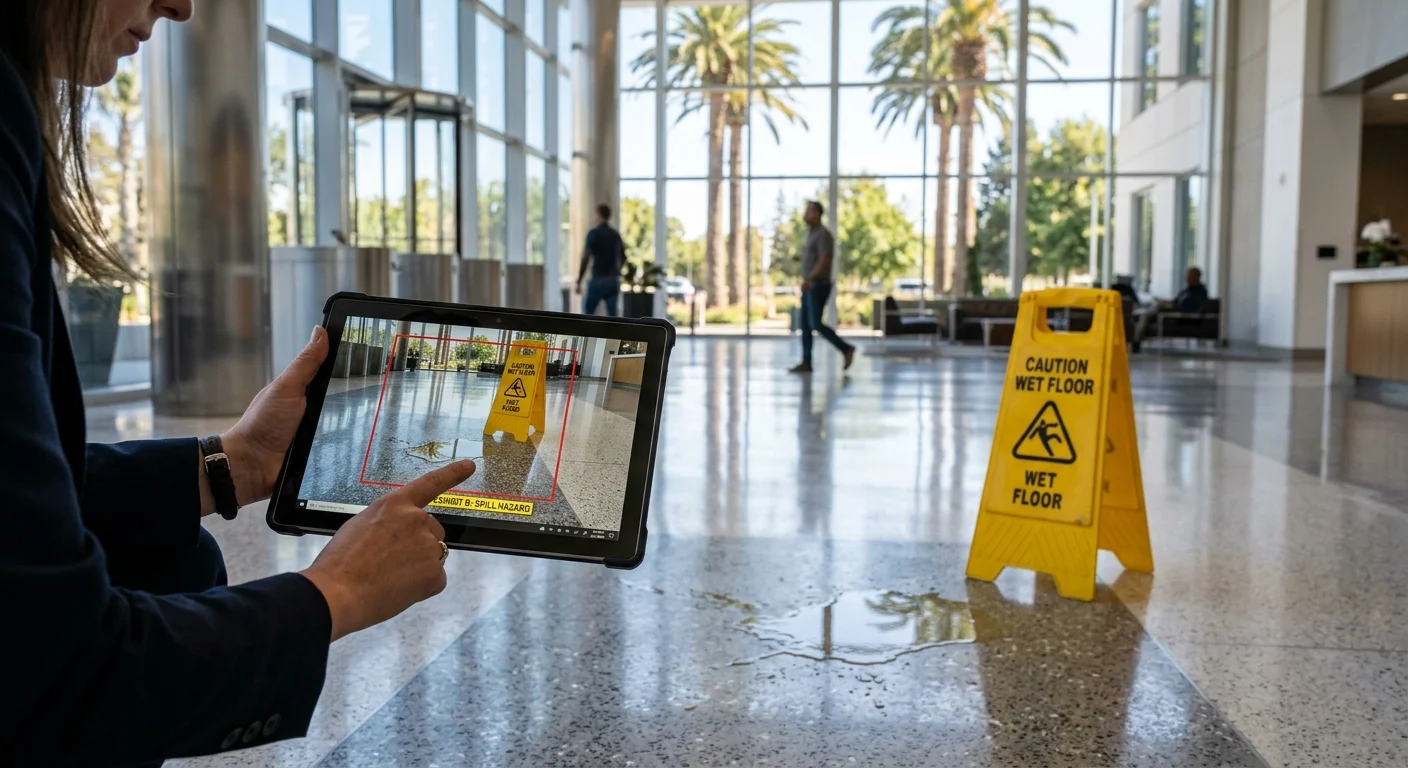
Proving liability hinges on establishing whether the property owner had actual notice or constructive notice of the hazard. Actual notice means the owner or an employee personally created the hazard or saw it prior to your fall. For example, if a store worker spills liquid on an aisle floor and leaves it unattended, actual notice is easily proven.
Constructive notice means the hazard existed for a sufficient length of time that a reasonable property owner should have discovered and fixed it. In California retail environments, courts look closely at inspection logs and sweep sheets. If a grocery store fails to inspect its produce department for two hours and a customer slips on a squished grape, the store likely had constructive notice of the hazard.
According to research from the National Floor Safety Institute, floors and flooring materials contribute directly to over 2 million fall injuries annually. The legal standard applied to your case varies depending on where your injury occurred and who controls the property.
| Property Type | Duty of Care Standard | Notice Requirement | Filing Deadline (Statute of Limitations) |
|---|---|---|---|
| Commercial Business (Retail/Grocery) | High: Duty to inspect, maintain, and warn visitors regularly. | Actual or Constructive Notice required. Routine sweeps expected. | 2 Years from the date of the fall. |
| Private Residential Property | Moderate: Duty to repair known defects or warn invited guests. | Actual Knowledge or obvious unaddressed hazards. | 2 Years from the date of the fall. |
| Government / Public Property | Strict: Specific statutory conditions under Government Claims Act. | Proof of dangerous public condition and prior written notice. | 6 Months to file formal administrative claim. |
| Workplace / Commercial Industrial Site | High: OSHA compliance and employer safety protocols apply. | Strict liability via Workers’ Comp or third-party negligence. | 30 Days for employer notice; 2 Years for third-party suit. |
California Pure Comparative Fault and Its Impact on Compensation

California operates under a pure comparative fault doctrine, established by the California Supreme Court in the landmark case Li v. Yellow Cab Co. (1975). This rule ensures that injured victims can recover financial compensation even if they were partially at fault for their own accident. Your final monetary award is simply reduced by your percentage of fault.
Insurance defense attorneys frequently argue that victims were distracted, wearing inappropriate footwear, or ignoring visible hazard signs. For instance, if a jury determines your total damages equal $100,000, but finds you were 20% at fault because you were looking at your mobile phone, you will receive $80,000. Even if you were determined to be 90% at fault, California law still allows you to collect the remaining 10% from a negligent property owner.
To defeat insurance comparative fault defenses, your legal team must prove the hazard was not open and obvious. Property owners cannot escape liability simply by claiming you should have looked down at every step. Pedestrians have a right to assume that retail walkways and public floors are maintained in a safe condition.
Calculating Claim Value: Medical Expenses, Lost Wages, and Pain
The monetary value of a California slip and fall claim depends on economic damages and non-economic damages. Economic damages cover out-of-pocket financial losses that can be proven with invoices, receipts, and wage stubs. Non-economic damages compensate you for physical pain, emotional distress, loss of enjoyment of life, and permanent physical impairment.
Medical treatment costs add up rapidly after a serious fall. Emergency department visits generally range between $1,500 and $5,000 for initial triage. High-definition diagnostic MRI scans cost between $1,000 and $4,500 per body region. Physical therapy programs often run $150 to $350 per individual session. If a fall results in torn knee cartilage, a herniated disc, or a broken hip requiring surgery, surgical intervention easily reaches $25,000 to $120,000 or more.
The National Safety Council reports that the total economic cost of preventable fall injuries runs tens of billions of dollars each year across medical expenditures and lost worker productivity. Understanding how much your personal injury case is worth involves multiplying your economic damages by a multiplier based on injury severity, long-term disability, and property owner egregiousness.
Mistakes to Avoid That Can Ruin Your California Slip and Fall Claim
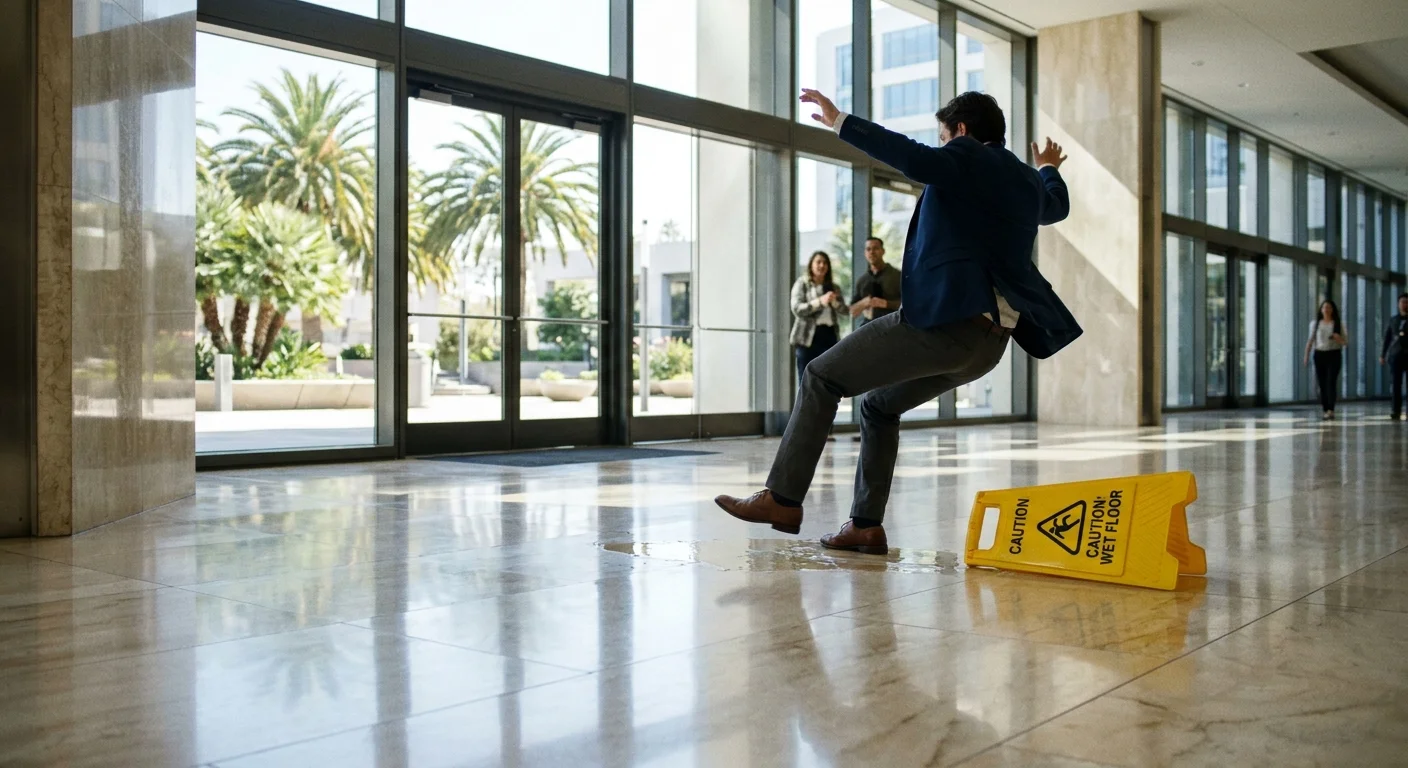
In our practice, we regularly see valid premises liability claims undermined by standard mistakes made in the immediate aftermath of an accident. Avoiding these critical errors protects your health and your legal rights:
- Failing to Report the Incident Immediately: Leaving the property without notifying management creates a missing link in documentation. The insurance company will claim the fall never happened on their property.
- Delaying Medical Diagnostic Care: Waiting weeks to see a doctor allows defense adjusters to argue your injuries stemmed from a completely unrelated event. Seek medical care on the day of the incident.
- Providing Recorded Statements to Adjusters: Insurance adjusters use leading questions during recorded interviews to get you to admit fault or downplay your physical pain. Never give a recorded statement without your lawyer present.
- Discarding the Shoes and Clothing You Wore: Your shoes and torn clothing are valuable physical evidence. Insurers often request to inspect footwear to claim lack of traction caused the slip. Save them in an unwashed state.
- Posting About Your Accident on Social Media: Defense investigators routinely monitor social media profiles. Photos of you smiling at a family gathering will be used to claim you are exaggerating your injuries.
FAQ
What is the statute of limitations for a slip and fall in California?
Under California Code of Civil Procedure § 335.1, you have two years from the date of the fall to file a personal injury lawsuit against a private property owner or business. However, if your fall occurred on government property, you must file a formal administrative claim within six months under the California Government Claims Act.
How do you prove a property owner knew about a dangerous hazard?
You can prove a property owner had knowledge of a hazard through employee store logs, maintenance records, witness statements, sweep sheets, and security camera footage. Demonstrating that a spill or structural defect existed for a long period creates constructive notice under California law.
Can you still recover damages if you were partially at fault for falling?
Yes, California applies a pure comparative fault standard to personal injury cases. You can still recover financial compensation even if you were partially to blame for your fall, though your total settlement payout will be reduced by your percentage of responsibility.
How long does a typical slip and fall case take to settle?
Straightforward claims with clear liability and minor injuries often settle in four to eight months. Complex cases involving severe injuries, surgical procedures, disputed liability, or formal litigation can take anywhere from 12 to 24 months to reach a resolution.
What should you do immediately after a slip and fall incident?
Report the fall to property management immediately, take photos of the exact hazard that caused you to slip, obtain contact details from any eyewitnesses, seek prompt medical evaluation, and consult an experienced California personal injury lawyer before speaking with insurance adjusters.
Is a slip and fall on a government sidewalk handled differently in California?
Yes, claims against government entities involve strict notice rules and shortened filing deadlines. You must present a formal written administrative claim to the public entity within six months of the fall before you are allowed to file a lawsuit in court.