You can legally sue an uninsured driver in California to recover compensation after an accident, but your decision to file a lawsuit must depend entirely on whether the at-fault driver has personal assets to pay a court judgment. If the driver has no money, no property, and no steady income, they are legally considered “judgment proof,” meaning winning a lawsuit will only leave you with a court paper you cannot collect on. For most accident victims, the most reliable and fastest path to financial recovery is filing an Uninsured Motorist (UM) claim through your own auto insurance policy, which covers your losses up to your policy limits. However, if you do not carry UM coverage and the at-fault driver owns real estate, runs a business, or earns a high salary, initiating a civil lawsuit is a highly effective way to secure compensation. Alternatively, if your damages are modest and fall below $12,500, California’s small claims court offers a streamlined, affordable venue to resolve the dispute without high attorney fees.
Key Takeaways
- California law allows you to file a civil lawsuit against any uninsured driver who causes your injuries.
- Winning a court judgment is meaningless if the at-fault driver is financially insolvent or “judgment proof.”
- Filing an Uninsured Motorist (UM) claim with your own insurance company is usually the fastest way to receive compensation.
- California Small Claims Court provides an affordable option for recovering property damage or minor injury costs under $12,500.
- Conducting a professional asset search before filing a lawsuit prevents you from wasting time and money on uncollectible claims.
Can You Sue an Uninsured Driver for Damages in California?
California law permits you to sue an uninsured driver for the full extent of your physical, emotional, and financial losses after an accident. Under the California Civil Code, anyone who operates a vehicle negligently is personally liable for the damages they cause, regardless of whether they have an active insurance policy. When you file a lawsuit, you bypass the insurance company completely and target the driver’s personal finances, bank accounts, and physical property. This legal right remains absolute, but the practical process of getting money from an individual without insurance differs significantly from a standard insurance claim. If you are struggling with medical bills and vehicle repairs, contact our legal team for specialized guidance on automobile and truck accidents to evaluate your options.
Uninsured drivers frequently face immediate administrative penalties from the state, but these actions do not automatically pay for your losses. When someone drives without coverage, they violate the state’s financial responsibility laws, which leads to license suspensions and vehicle registration holds. However, civil courts do not act as collection agencies; they only determine who is at fault and how much money that party owes you. To turn a court victory into tangible financial recovery, you must actively pursue the driver’s personal assets through legal enforcement mechanisms.
An important legal hurdle to consider is California’s Proposition 213, which restricts the types of damages you can recover if you were also driving uninsured at the time of the collision. Under this law, if you did not carry valid auto insurance during the crash, you cannot recover non-economic damages, such as pain and suffering, even if the other driver was completely at fault. You can still sue for economic damages like medical bills and car repairs, but your recovery potential drops significantly. If you were properly insured, Proposition 213 does not apply to you, and you can pursue full compensation for all your losses.
How to Decide: Can I Sue an Uninsured Driver or File an Insurance Claim?
Deciding whether to file a civil lawsuit or pursue an insurance claim depends entirely on your own insurance policy details and the at-fault driver’s personal financial health. If your auto policy includes Uninsured Motorist Bodily Injury (UMBI) and Uninsured Motorist Property Damage (UMPD) coverage, you should almost always file a claim with your own insurer first. Your insurance company will step into the shoes of the at-fault driver’s missing insurance provider, evaluating your medical bills, lost wages, and repair costs up to the limits of your policy. This process is faster, safer, and does not require you to track down an individual’s hidden bank accounts or real estate holdings.
If you lack UM coverage, your choices narrow down to filing a formal lawsuit in California Superior Court or seeking a faster resolution in Small Claims Court. A formal lawsuit is ideal for major accidents involving severe, life-altering injuries that require extensive medical care, while small claims is best for minor disputes. To help you evaluate which path aligns with your current situation, review the comparison table below detailing the three primary methods of recovery after a crash with an uninsured driver.
| Recovery Option | Best Used For | Cost & Complexity | Likelihood of Actual Collection |
|---|---|---|---|
| Uninsured Motorist (UM) Claim | Victims who carry UM coverage on their personal auto policy. | Low cost; handled directly through your own insurance provider. | Very High (guaranteed up to your policy limits). |
| Civil Lawsuit (Superior Court) | Severe injuries, high medical bills, and defendants with clear personal assets. | High cost; requires filing fees ($435–$450) and formal legal representation. | Medium to Low (depends entirely on the defendant’s personal wealth). |
| Small Claims Court | Minor injuries or vehicle repairs totaling less than $12,500. | Low cost; filing fees range from $30 to $75, and lawyers are not permitted. | Medium to Low (still requires manual collection of the debt). |
| MedPay & Health Insurance | Immediate payment of medical bills regardless of who caused the accident. | Low cost; utilizes existing health coverages to prevent medical debt. | High (covers medical providers directly up to health plan limits). |
The “Judgment Proof” Reality of Uninsured Motorists
An at-fault driver is legally considered “judgment proof” when they do not own real property, possess valuable liquid assets, or earn a steady, garnishable income. Winning a courtroom battle against a judgment-proof driver is relatively easy, but collecting your monetary award is nearly impossible. Courts do not force defendants to pay you with money they do not have, and they will not throw an uninsured driver in jail for failing to pay a civil debt. Consequently, a $100,000 judgment against someone living paycheck-to-paycheck with no savings will yield nothing but frustration and unpaid legal bills.
This issue is incredibly common because of the demographics of uninsured drivers. According to research published by the Insurance Research Council, approximately 16.6% of California drivers operate their vehicles without any insurance coverage. This means nearly one in six drivers on the road is uninsured, and many of these individuals drive without coverage precisely because they cannot afford the monthly premiums. Because they lack financial resources, they rarely have bank accounts with significant balances or real estate that you can target to satisfy your losses.
The California Department of Motor Vehicles maintains strict financial responsibility laws, requiring drivers to carry minimum liability limits of $30,000 for single bodily injuries and $15,000 for property damage. When drivers ignore these laws, they are rarely prepared to cover these costs out of pocket. However, if you do obtain a judgment against an uninsured driver, California law allows you to renew that judgment every 10 years. If the driver inherits money, buys a home, or secures a high-paying job in the future, you can enforce the judgment down the road, though this provides zero financial relief for your immediate medical bills today.
What Steps Should You Take Immediately After an Uninsured Driver Accident?
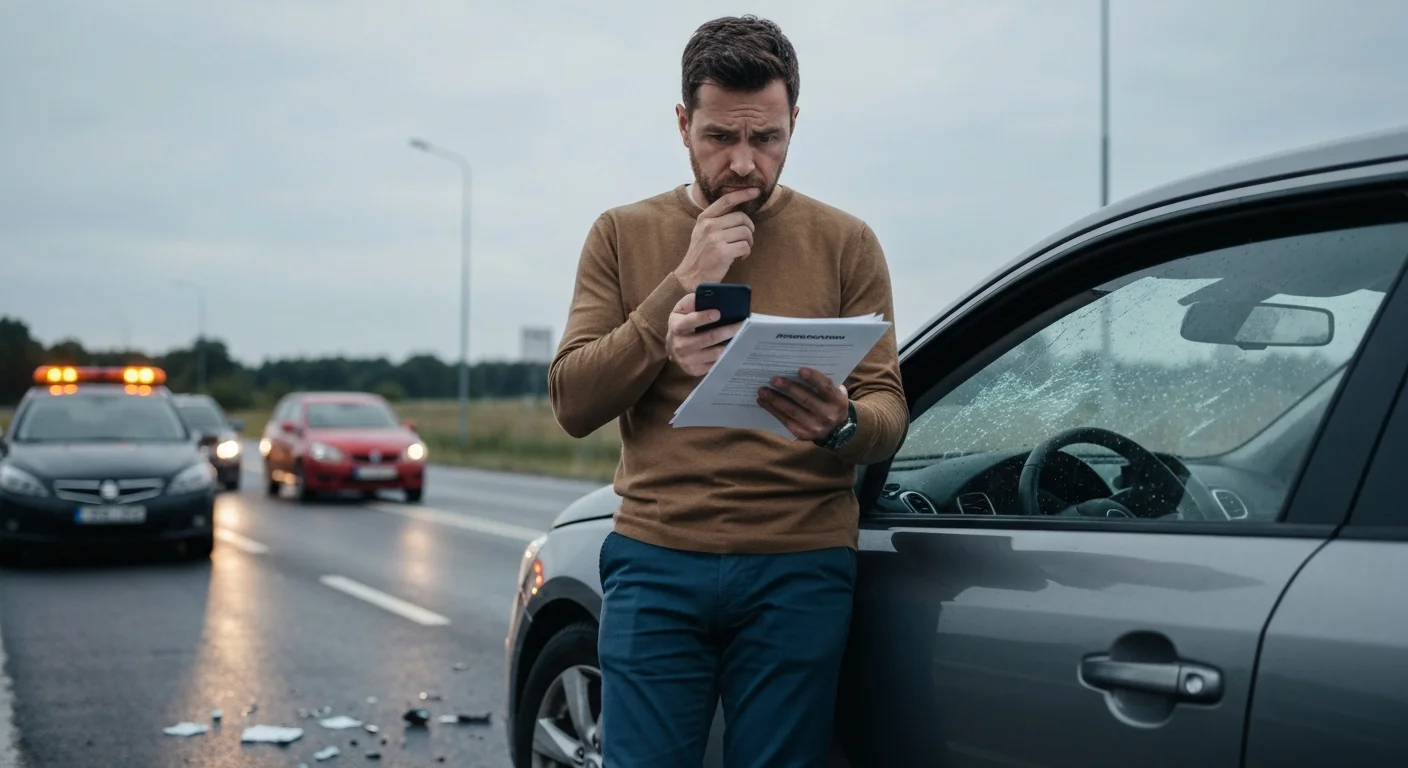
Taking immediate, strategic actions after a collision with an uninsured driver is essential to preserving your physical health and securing your legal right to compensation. If you are unsure of how to navigate the immediate aftermath, review our complete guide on what to do immediately after a car accident in California to protect your rights.
To ensure you do not make mistakes that could ruin your chance of recovery, follow this structured, step-by-step checklist:
- Call local law enforcement immediately: Ensure a police officer comes to the scene to document the crash. A formal police report provides objective proof of fault, which is vital for both civil lawsuits and UM insurance claims.
- Document the scene thoroughly: Use your phone to take clear photos of all vehicle damage, license plates, the surrounding intersection, road hazards, and any visible physical injuries.
- Gather witness contact information: Speak to anyone who saw the crash and write down their names, phone numbers, and email addresses, as their independent testimony is highly valuable.
- Exchange contact details: Write down the at-fault driver’s full name, address, phone number, and driver’s license number, even if they admit they do not have auto insurance.
- Seek immediate medical evaluation: Visit an emergency room or urgent care clinic within 24 hours of the crash, even if you feel fine, to professionally document all physical injuries.
- Submit an SR-1 form to the DMV: Under California law, you must report any accident causing injury or property damage exceeding $1,000 to the DMV within 10 days of the collision.
- Consult a personal injury lawyer: Before speaking to any insurance adjusters, contact an attorney to conduct a professional asset search on the at-fault driver to determine the best path forward.
What Compensation Can You Recover in an Uninsured Motorist Lawsuit?

You can pursue the exact same categories of compensatory damages in a lawsuit against an uninsured driver as you would in a standard personal injury claim. These damages are designed to make you financially whole by covering every direct and indirect cost resulting from the accident. Economic damages cover verifiable financial losses, starting with emergency medical care, which can range from $150 for a basic clinic visit to over $100,000 for complex orthopedic surgeries or ICU stays. You can also claim future medical treatment costs, physical therapy bills, lost wages, and lost earning capacity if your injuries prevent you from returning to your regular line of work.
Property damage is another significant component of your financial recovery. Standard bumper repairs or minor dent removals typically cost between $500 and $1,500, but severe frame damage or total vehicle losses can easily exceed $10,000 to $20,000. If you do not have UMPD insurance coverage, you must sue the driver directly to recover these vehicle repair and replacement expenses. According to historical safety data from the National Highway Traffic Safety Administration, the economic toll of motor vehicle accidents is staggering, making it essential to recover every dollar possible to avoid personal bankruptcy.
Non-economic damages, which cover subjective, non-financial losses, are also available if you were properly insured at the time of the crash. These include compensation for physical pain, mental suffering, emotional distress, loss of enjoyment of life, and physical disfigurement. However, because these damages are subjective, insurance companies and courts evaluate them carefully, making detailed medical records and psychological evaluations highly critical to proving your case.
Common Professional Mistakes to Avoid When Dealing With Uninsured Accidents
The most devastating mistake an accident victim can make is failing to search for secondary, hidden defendants who may actually have insurance coverage or substantial corporate assets. While the driver who physically struck your vehicle might be uninsured and broke, they may have been operating the vehicle on behalf of an employer, running a business errand, or driving a borrowed vehicle owned by a wealthy relative. Under California’s permissive user laws and vicarious liability doctrines, the vehicle owner or the driver’s employer can often be held financially liable for your injuries, providing a viable avenue for full recovery.
Another common professional mistake is assuming your personal auto insurance rates will skyrocket if you file an Uninsured Motorist claim. Under California Proposition 103, insurance companies are legally prohibited from increasing your monthly premiums for accidents where you were not at fault. Your UM coverage is a benefit you have actively paid for to protect yourself from negligent, irresponsible drivers on the road. Refusing to use this coverage out of fear of premium hikes is a critical error that leaves valuable money on the table while you struggle with piling medical bills.
Additionally, victims frequently ruin their cases by delaying medical treatment or failing to report the accident to the DMV. If you wait weeks to see a doctor because you believe there is no insurance money to collect, you create a major gap in your medical records. If your attorney later discovers a viable third-party defendant or a hidden insurance policy, the defense will use your delayed medical care to argue that your injuries were not serious or were caused by an unrelated event. Always treat your injuries immediately and consult a professional attorney to protect your legal options from day one.
FAQ
Can you sue an uninsured driver if you do not have insurance yourself?
Yes, you can still sue an uninsured driver if you are also uninsured, but your recovery is legally limited by California’s Proposition 213. This law prevents uninsured drivers from recovering non-economic damages, such as pain and suffering or emotional distress. You are restricted to pursuing economic damages only, which include your actual medical bills, lost wages, and vehicle repair costs.
How long do you have to file a lawsuit against an uninsured driver in California?
You have exactly two years from the date of the accident to file a personal injury lawsuit against an uninsured driver in California. For property damage claims, such as vehicle repair or replacement costs, the statute of limitations is three years. Failing to file your lawsuit within these strict legal deadlines permanently destroys your right to seek compensation in court.
What happens if an uninsured driver lies about having insurance at the scene?
If an uninsured driver provides false insurance information, they are committing insurance fraud and violating California Vehicle Code Section 16025. You should report this fraud to local law enforcement and the DMV immediately so they can face criminal penalties and license suspension. Your attorney can use this deceptive behavior in court to challenge the driver’s credibility and strengthen your civil case.
Is it worth suing an uninsured driver who has no job or assets?
Suing an uninsured driver who has no job, income, or assets is generally not worth the time, effort, and legal expenses. Because they are legally “judgment proof,” you will likely spend thousands of dollars on filing fees and court costs only to receive a judgment you cannot collect. Your time is much better spent looking for alternative recovery options, such as your own health insurance, MedPay, or UM coverage.
Which insurance coverage pays for your car repairs if you are hit by an uninsured driver?
Your vehicle repairs will be paid by your Collision coverage or your Uninsured Motorist Property Damage (UMPD) coverage. Collision coverage pays for your vehicle repairs regardless of fault, but you must pay your standard deductible. UMPD coverage specifically covers your vehicle damage up to $3,500 when hit by an uninsured motorist, and it does not require you to pay a deductible.
How do you collect money after winning a judgment against an uninsured motorist?
Collecting a court judgment requires you to locate the debtor’s assets and utilize court-approved collection methods like wage garnishment or bank account levies. You can also place an abstract of judgment on any real estate they own, which prevents them from selling or refinancing their property without paying you first. If the driver remains completely insolvent, you may have to wait and renew the judgment every 10 years until their financial status improves.