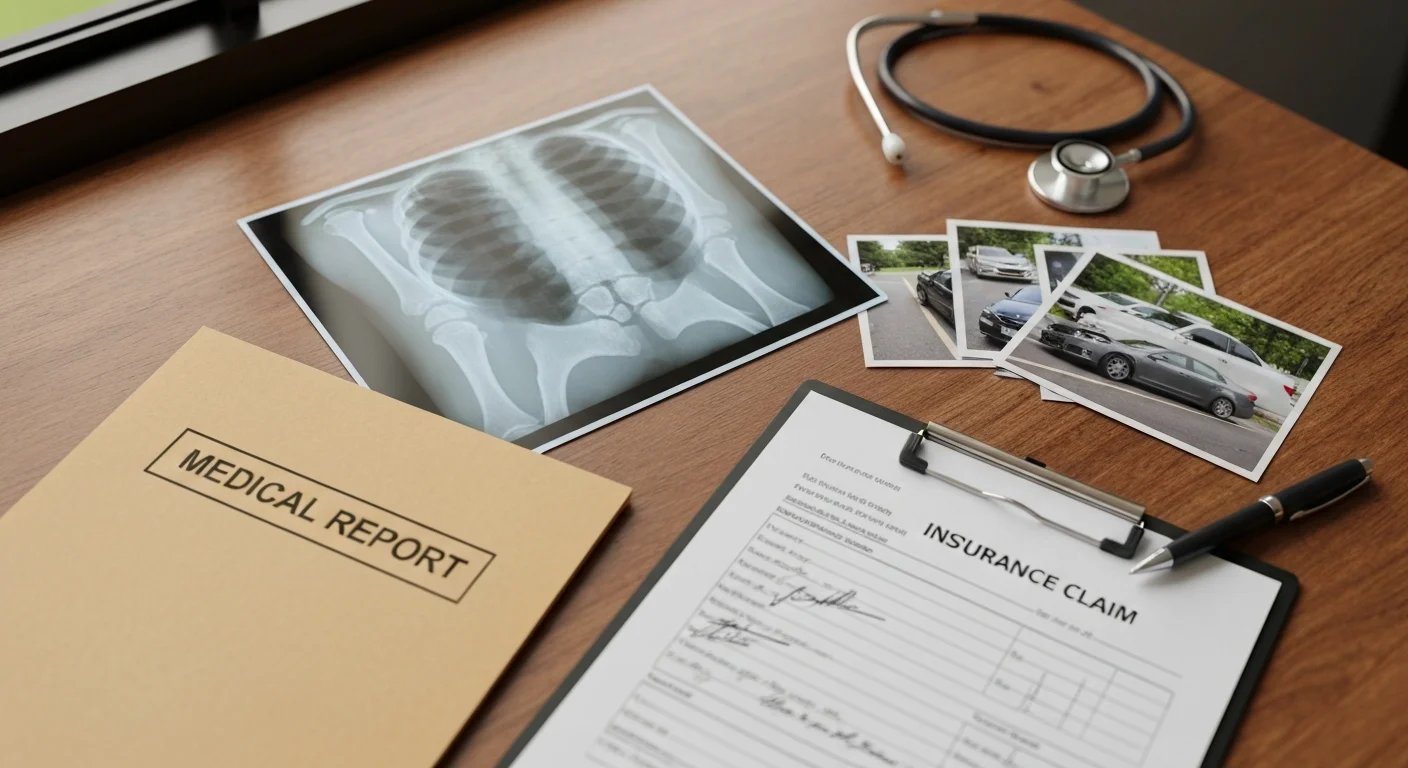
To win a personal injury lawsuit or secure a maximum insurance settlement in California, you must gather three primary pillars of proof: comprehensive medical records demonstrating the exact nature of your injuries, objective digital or physical evidence showing fault, and financial documentation quantifying your financial losses. For straightforward cases with clear liability, focus on immediate photographic proof of the scene, witness contact details, and a certified police report. For complex disputes involving shared fault, commercial vehicles, or catastrophic injuries, you must secure expert reconstruction analysis, surveillance footage, and corporate safety logs. We recommend hiring a qualified legal professional immediately to subpoena digital records before they are legally erased. Gathering this personal injury evidence prevents insurance adjusters from denying your claim or shifting blame to you. Taking immediate action after an accident ensures that crucial proof does not disappear, protecting your right to full compensation.
Key Takeaways
- Objective physical evidence like scene photos and dashcam footage forms the foundation of liability disputes.
- Comprehensive medical records must link your specific injuries directly to the accident to counter insurance denials.
- Spoliation letters sent by legal counsel prevent defendants from destroying critical electronic and surveillance evidence.
- Expert witness testimonies translate complex medical and engineering data into clear proof of fault and damages.
- Meticulous documentation of lost wages and out-of-pocket costs guarantees full recovery of financial damages.
Understanding Personal Injury Evidence Categories
Proving a personal injury claim requires gathering different types of evidence that work together to tell a clear story of negligence. California civil law operates on the principle of comparative fault, meaning multiple parties can share liability. To secure compensation, your evidence must clearly demonstrate that the defendant breached their duty of care. This breach must be the direct cause of your injuries and subsequent financial losses.
Attorneys classify evidence in personal injury cases into three primary categories: physical, documentary, and testimonial. Physical evidence includes tangible objects, such as a damaged vehicle part or a torn piece of clothing. Documentary evidence refers to written records, including medical files, police reports, and employment logs. Testimonial evidence consists of verbal or written statements from witnesses, responding officers, and medical specialists.
Combining these categories helps build an indisputable timeline of events. For instance, a physical scuff mark on a helmet combined with emergency room records and an eyewitness statement forms a solid case. If you want to understand how these elements fit into the broader litigation landscape, check out our complete guide on what is a personal injury case.
Critical Photographic and Digital Evidence in Personal Injury Cases
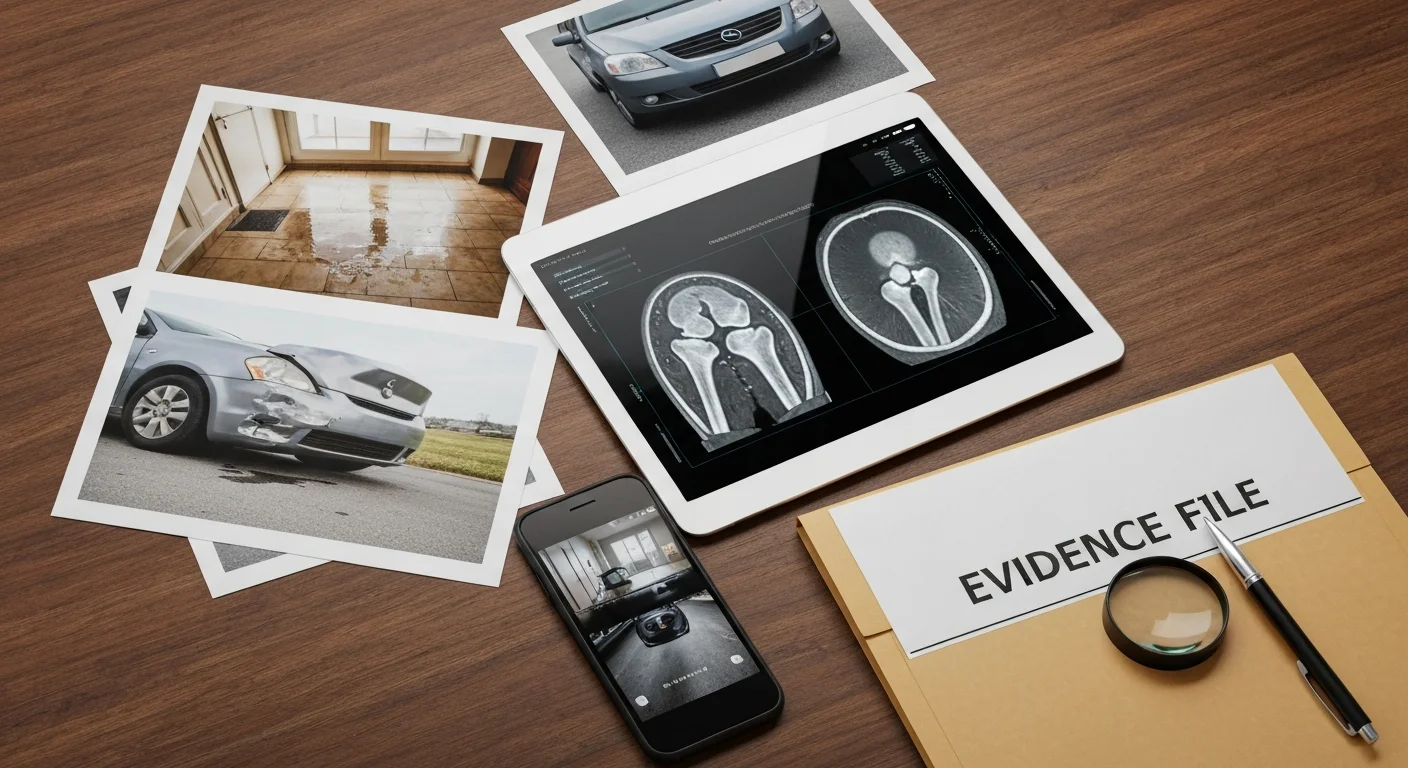
Visual evidence provides immediate, objective proof that insurance adjusters and jury members cannot easily dismiss. In the digital age, photos and electronic logs are often the most influential elements of personal injury evidence. Because physical scenes change rapidly, you must capture visual documentation before weather, construction, or repairs alter the environment.
High-quality photographs of the accident scene should capture multiple angles, lighting conditions, and potential hazards. In a car crash, this includes skid marks, vehicle positioning, and damaged traffic signs. For a slip-and-fall incident, take close-up photos of the hazard, such as spilled liquid, uneven flooring, or broken handrails. Additionally, take photos of your injuries immediately after the incident and throughout your recovery process.
Digital evidence extends far beyond basic cell phone photography. Modern personal injury claims frequently rely on electronic data sources, including:
- Commercial security camera footage from nearby businesses.
- Residential smart doorbell cameras capturing the street view.
- Vehicle dashcam recordings from your car or passing motorists.
- Event Data Recorders (EDRs), commonly known as vehicle black boxes.
According to the National Highway Traffic Safety Administration, modern vehicle black boxes record critical telemetry data during a crash. This data includes exact travel speed, braking activity, and seatbelt usage in the seconds leading up to an impact. Because private businesses and homeowners routinely overwrite video footage within 7 to 30 days, your attorney must act quickly. Sending a formal spoliation letter legally obligates these parties to preserve all relevant video files.
How Medical Documentation and Billing Records Prove Your Claim
Medical evidence serves as the cornerstone for establishing the physical and economic reality of your injuries. Without consistent, detailed medical records, insurance companies will claim your injuries were pre-existing or exaggerated. To successfully prove your personal injury claim, you must establish an unbroken chain of medical treatment starting immediately after the accident.
Your medical documentation must clearly connect your injuries directly to the incident. Insurance adjusters look closely at the timing of your first medical evaluation. Waiting even a few days to seek treatment gives the insurer an excuse to argue that your injuries occurred elsewhere. Every medical visit generates vital documentation, including emergency room intake forms, diagnostic imaging reports, surgical summaries, and physical therapy progress notes.
These records also establish the financial foundation of your claim. According to data published by the National Safety Council, the average economic cost of an injury-causing motor vehicle crash exceeds $40,000 per injured person. When calculating your total medical damages, you must compile all bills, which often include:
- Emergency medical transportation and ambulance fees ranging from $1,000 to $3,500.
- Hospital emergency room visits, which easily cost between $5,000 and $25,000.
- Diagnostic imaging, including X-rays and MRI scans costing $500 to $3,000.
- Prescription medications, medical devices, and future rehabilitative therapy.
Always follow your doctor’s treatment plan exactly. Missing appointments or stopping physical therapy early suggests to the defense that you have fully recovered. This simple mistake can significantly lower the value of your final settlement.
The Role of Official Reports and Witness Statements
Official reports and third-party testimonies provide unbiased support for your version of the events. While your personal account of the accident is valuable, insurance companies view it as inherently self-serving. Independent documentation from law enforcement and neutral bystanders carries much more weight during negotiations.
A police report is often the first document an insurance adjuster reviews when evaluating liability. When officers respond to a crash, they document the weather conditions, vehicle positions, and apparent traffic violations. They also record their initial assessment of fault and note whether they issued any citations. While police reports are sometimes deemed inadmissible hearsay in a trial, they remain highly persuasive during settlement negotiations.
For incidents that do not involve motor vehicles, other official reports are crucial. A slip-and-fall at a grocery store requires a formal store incident report. An injury on a construction site may trigger an investigation by the Occupational Safety and Health Administration. These federal and state reports provide objective, official records of safety violations and hazardous conditions.
Eyewitness statements provide context that physical evidence alone cannot show. Passersby, other drivers, and nearby employees can confirm details like traffic light colors, distracted driving behaviors, or a store owner’s failure to clean a spill. If you are physically able at the scene, gather the names, phone numbers, and email addresses of all witnesses. Your legal team can contact them later to secure formal, written statements before their memories fade.
How to Prove Personal Injury Claim Damages and Financial Loss
Demonstrating financial loss requires concrete evidence of how the accident damaged your financial security and future earning potential. To recover full compensation, you must prove both economic damages (quantifiable bills and losses) and non-economic damages (pain, suffering, and emotional distress). This requires keeping meticulous financial records from the very first day of your recovery.
Lost wages represent a major portion of your economic recovery. To prove lost income, you must provide past pay stubs, tax returns from previous years, and a formal letter from your employer. This letter should detail your hourly wage or salary, the number of hours missed, and the total missed pay. If your injury prevents you from returning to your career, you will need a vocational expert to calculate your loss of earning capacity over your remaining working years.
Out-of-pocket expenses also qualify for reimbursement under California law. Keep every receipt for purchases related to your recovery. This includes payments for home modifications like wheelchair ramps, specialized transportation services, over-the-counter medical supplies, and hired help for household chores you can no longer perform.
Proving non-economic damages, such as pain and suffering, requires a different approach. Because these losses lack a specific price tag, you must use daily pain journals and psychological evaluations to demonstrate your reduced quality of life. Documenting your daily pain levels, sleep disturbances, and missed family activities helps paint a clear picture of the human cost of the injury.
Expert Testimony and Technical Analysis
Complex personal injury claims often require specialized scientific and professional testimony to establish liability and value. When the mechanics of an accident are disputed, or the long-term medical impacts are unclear, expert witnesses provide clarity. These highly trained professionals explain complicated technical concepts to insurance adjusters, judges, and juries.
Accident reconstruction engineers use physics and computer modeling to recreate the crash scene. They analyze vehicle crush patterns, tire marks, and black box data to determine vehicle speeds and angles of collision. Hiring a certified reconstruction expert can cost between $2,000 and $10,000, but their findings often establish liability in disputed cases.
Medical experts are equally vital to your claim. While your treating physician documents your current care, an independent medical expert can project your future medical needs. They can estimate the cost of future surgeries, lifelong physical therapy, and home care. This projection ensures your settlement covers your medical needs for the rest of your life.
Financial experts, including forensic economists, calculate the long-term impact of inflation on your medical expenses and lost earning capacity. They present detailed calculations showing the present-day value of your future financial losses. This professional analysis prevents the defense from underestimating your long-term economic damages.
Comparing the Weight of Different Evidence Types

Not all evidence carries the same weight in a legal dispute. Understanding how insurers and courts view different types of proof can help you prioritize your collection efforts. The following table compares the admissibility and persuasive power of common evidence types:
| Evidence Type | Admissibility Level | Primary Purpose | Impact on Settlement |
|---|---|---|---|
| Medical Records | Extremely High | Proves injuries and treatment costs | Critical for determining value |
| Police Reports | Moderate (often inadmissible at trial) | Provides initial assessment of fault | Highly persuasive for adjusters |
| Video/Photo Footage | Extremely High | Shows real-time accident mechanics | Often settles liability disputes |
| Eyewitness Statements | High | Provides unbiased observations | Strong corroborating proof |
| Personal Pain Journals | Moderate | Documents daily struggles and pain | Supports pain and suffering claims |
Step-by-Step Guide: How to Preserve Evidence After an Accident
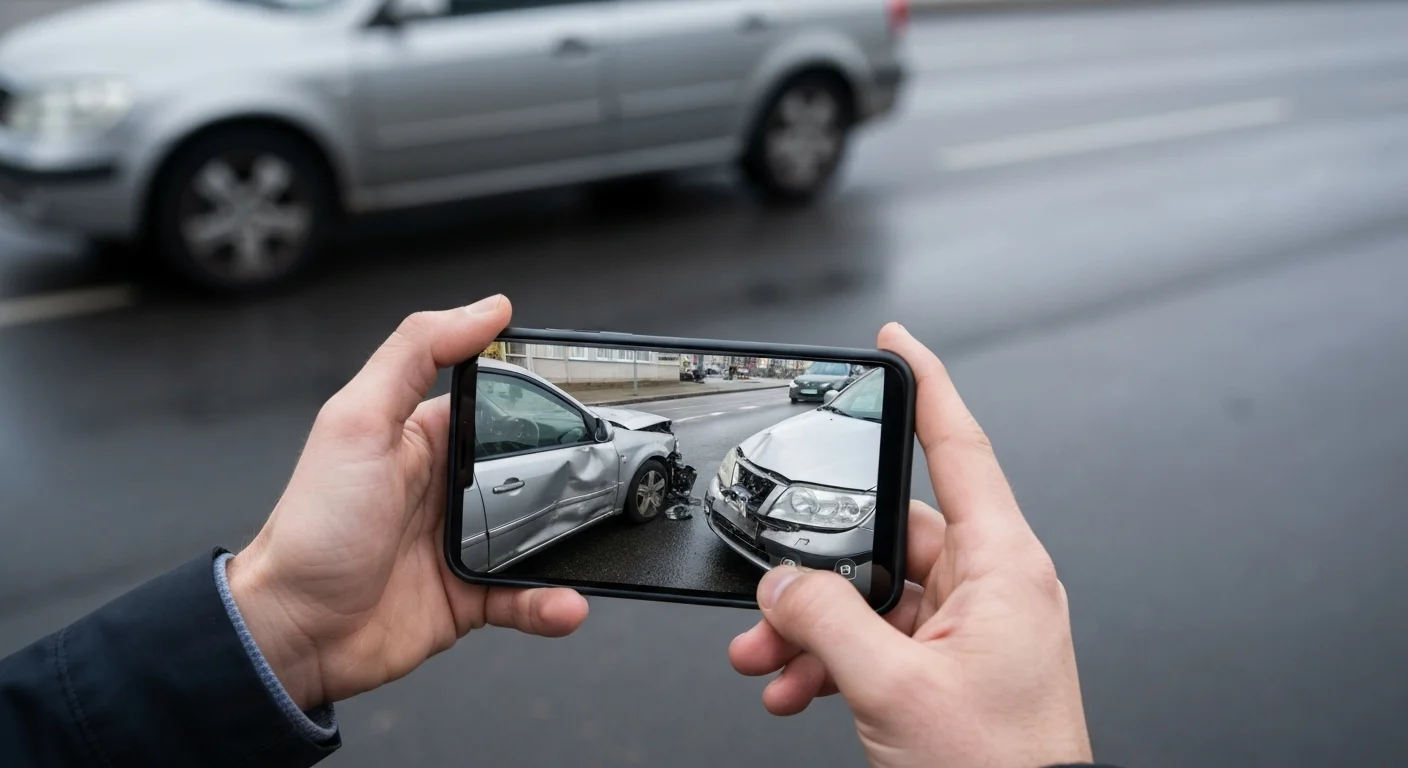
The actions you take in the minutes, days, and weeks following an accident directly impact your ability to recover fair compensation. To protect your legal rights, follow these systematic steps to secure and preserve critical evidence:
- Ensure safety and call emergency services: Check for injuries, move to a safe area if possible, and dial 911 immediately to request police and medical assistance.
- Document the scene visually: Take wide-angle and close-up photos of vehicles, road conditions, hazards, injuries, and nearby traffic signs before anything is moved.
- Exchange information and gather witnesses: Collect names, phone numbers, insurance details, and driver’s license numbers from everyone involved, and get contact details from bystanders.
- Seek immediate medical evaluation: Visit an emergency room, urgent care, or your primary care doctor within 24 hours, even if your injuries seem minor.
- Report the incident to the authorities: Request a copy of the official police or business incident report, and review it for any factual errors.
- Draft a detailed personal account: Write down your memory of the events leading up to, during, and after the accident while the details are still fresh in your mind.
- Preserve physical evidence: Keep the clothing and shoes you wore during the accident unwashed, and store any damaged personal property in a safe place.
- Consult an experienced attorney: Contact an injury lawyer before speaking with insurance adjusters or signing any settlement offers.
Following this structured approach ensures you do not overlook vital details. For more information on navigating the aftermath of an auto collision, refer to our complete guide on settling your accident claim.
Common Evidence Mistakes That Can Ruin Your Case
Making a single error during the evidence-gathering phase can severely damage your personal injury claim. Insurance defense teams look for any opportunity to discredit your testimony or minimize your injuries. Avoiding these common mistakes will protect the value of your claim and help secure a fair outcome.
One of the most damaging mistakes is giving a recorded statement to the insurance adjuster without your lawyer present. Adjusters are trained to ask misleading questions designed to get you to admit fault or downplay your injuries. They may use your words against you later in the claim process. Politely decline to provide a recorded statement until you have consulted with legal counsel.
Another major mistake is posting about your accident or recovery on social media. Insurance defense attorneys monitor your public profiles looking for photos or comments that contradict your injury claims. A photo of you smiling at a family dinner or taking a short walk can be used to argue that you are not in pain. The safest option is to pause all social media activity while your claim is active.
Failing to secure electronic evidence quickly can also ruin your case. Security camera footage, commercial truck logbooks, and black box data are often overwritten automatically. According to the Bureau of Justice Statistics, nearly 96% of personal injury cases are resolved through settlements before a trial begins. This means having strong, preserved evidence is critical to convincing insurance companies to settle fairly without a court battle.
FAQ
What is the most important evidence in a personal injury case?
While every piece of proof matters, medical records are generally the most important evidence in any personal injury claim. These records offer objective, clinical proof of the existence, severity, and cause of your injuries. Without clear medical documentation, you cannot prove the damages you suffered, regardless of how clear the liability may be.
How long do I have to collect evidence after an accident?
You should begin collecting evidence immediately after an accident, as physical evidence can disappear and memories fade within days. While California’s statute of limitations generally gives you two years to file a lawsuit, waiting to gather evidence can weaken your case. Overwritten security footage, repaired vehicles, and lost witness contact details can severely limit your ability to prove liability.
Can social media posts be used as evidence against me?
Yes, insurance defense teams routinely monitor and use social media posts as evidence against personal injury plaintiffs. Even innocent posts, comments, or photos can be taken out of context to argue that your injuries are not as severe as you claim. It is highly recommended to adjust your privacy settings and avoid posting anything about your life or the accident during your case.
Is a police report considered definitive proof of fault?
No, a police report is not considered definitive proof of fault, and its conclusions are not always binding in a civil court. Insurance companies and courts conduct their own investigations, though they do give significant weight to the responding officer’s initial assessment. An experienced attorney can challenge an inaccurate police report using physical evidence, camera footage, and accident reconstruction experts.
When should I hire a lawyer to help gather evidence?
You should hire a personal injury lawyer as soon as possible after your accident to ensure all critical evidence is preserved. An attorney can immediately send formal spoliation letters, subpoena camera footage, locate witnesses, and hire experts before evidence is lost or destroyed. Early legal representation protects your rights and allows you to focus fully on your physical recovery.
How do I get security camera footage of my accident?
To obtain security camera footage, you must identify nearby businesses or homeowners and formally request that they preserve and share their recordings. Because private owners are not legally obligated to hand over footage voluntarily, your attorney may need to send a spoliation letter or issue a formal subpoena. Acting quickly is critical, as many surveillance systems overwrite their files within a couple of weeks.