
When you or a loved one suffers an injury due to someone else’s negligence, it can turn your life upside down. Understanding the various types of personal injury cases is crucial to knowing your rights and whether you have a viable claim for compensation. For injuries sustained in common incidents like car crashes or slip and falls, your path likely falls under motor vehicle accidents or premises liability. If a defective product caused harm, you’d be looking at product liability. For severe injuries that dramatically alter your life, a catastrophic injury claim might be most appropriate. Determining the exact nature of your claim is the first critical step toward recovery, and it often involves complex legal principles like duty of care, negligence, and causation. The right classification ensures you pursue the correct legal strategy, aiming for full compensation for medical bills, lost wages, pain, and suffering. Identifying the specific type of personal injury accident early on allows your legal team to build a strong case tailored to the circumstances of your harm.
Key Takeaways
- Personal injury cases arise when someone else’s negligence or intentional act causes you harm.
- Common types include motor vehicle accidents, premises liability, and product liability, each with distinct legal considerations.
- Specialized cases like medical malpractice or wrongful death require specific expertise due to their complexity.
- Collecting evidence, seeking prompt medical attention, and consulting an experienced attorney are vital steps after any injury.
- California law allows you to seek compensation for various damages, including economic losses and non-economic suffering.
Understanding What Defines a Personal Injury Case
A personal injury case is a legal dispute that emerges when one person experiences harm because of another individual’s or entity’s negligence or intentional wrongdoing. The core principle revolves around seeking financial compensation for the damages suffered. This compensation aims to cover various losses, from medical expenses and lost income to the emotional distress and diminished quality of life caused by the injury.
To successfully pursue a personal injury claim, you generally need to establish four key elements: duty, breach, causation, and damages. First, the at-fault party must have owed you a duty of care, meaning a legal obligation to act responsibly and avoid causing harm. Second, they must have breached that duty, acting carelessly or failing to take reasonable precautions. Third, their breach must have been the direct cause of your injuries, meaning your harm would not have occurred otherwise. Finally, you must have suffered actual damages, whether physical, financial, or emotional. Without clear evidence supporting each of these elements, a personal injury claim can be difficult to prove.
One common professional mistake many injured individuals make is delaying legal consultation. Evidence can disappear, witnesses’ memories can fade, and crucial deadlines, known as statutes of limitations, can expire. For instance, in California, you generally have two years from the date of injury to file a personal injury lawsuit, though specific circumstances can alter this timeframe. Consulting an attorney promptly ensures that evidence is preserved and all legal avenues are explored effectively.
Common Personal Injury Accidents and Claims
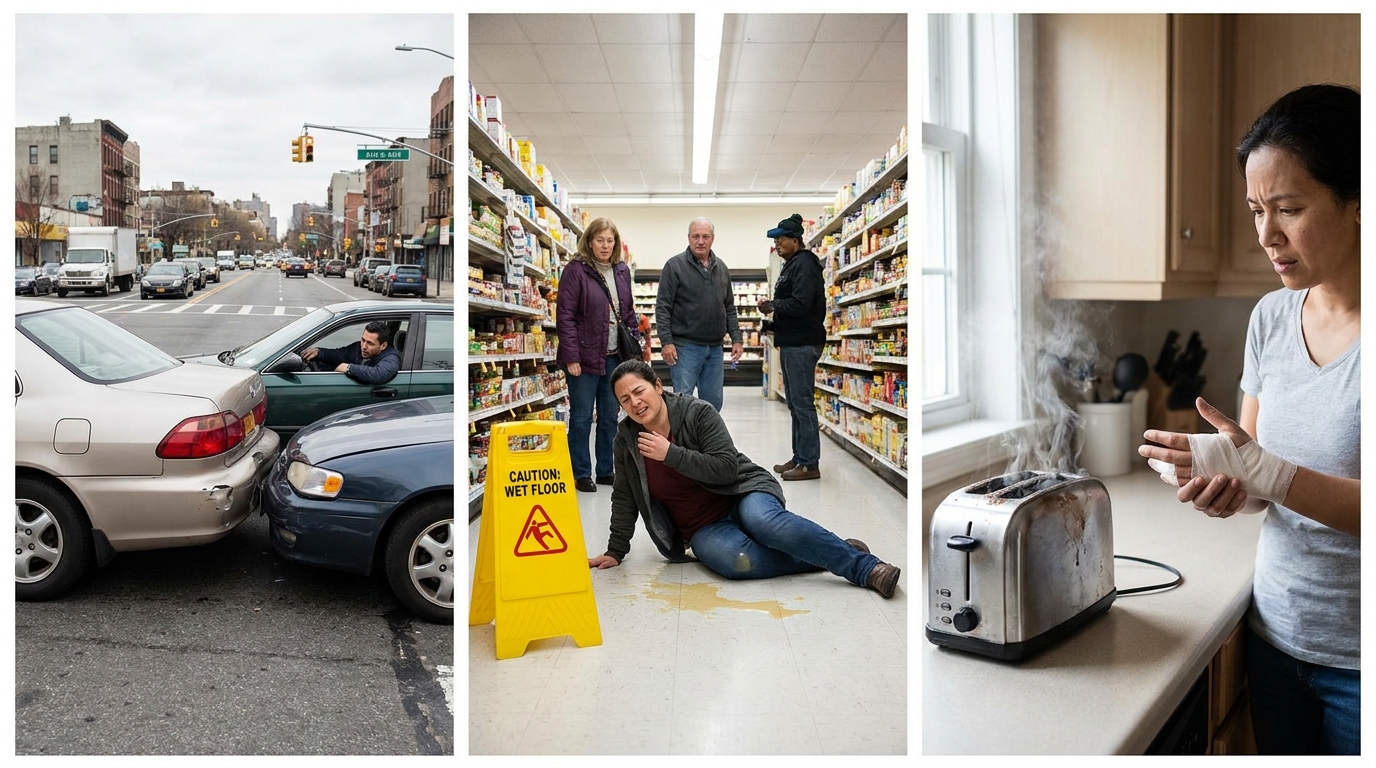
Many everyday incidents can escalate into serious personal injury claims when negligence is involved. These common scenarios form the bulk of cases handled by personal injury lawyers, each presenting unique challenges and legal pathways for seeking justice and compensation.
Motor Vehicle Accidents
Motor vehicle accidents are, without a doubt, one of the most common types of personal injury cases. They encompass a broad spectrum of incidents, including collisions involving cars, trucks, motorcycles, bicycles, and pedestrians. Driver negligence is often the root cause, stemming from distracted driving, speeding, driving under the influence, or failing to obey traffic laws. The National Highway Traffic Safety Administration (NHTSA) reported that in 2022, there were 40,990 traffic fatalities in the U.S., highlighting the severe consequences of these accidents. Beyond fatalities, countless individuals suffer debilitating injuries annually.
Injuries from motor vehicle accidents can range from whiplash and concussions to broken bones, spinal cord damage, and traumatic brain injuries. These injuries often require extensive medical treatment, rehabilitation, and can lead to significant lost wages. Dealing with insurance companies after an accident can be particularly complex. They may try to minimize payouts or deny claims altogether. Having an experienced personal injury attorney on your side is crucial to negotiate with insurers, gather necessary evidence, and ensure your rights are protected against tactics designed to reduce your rightful compensation.
Premises Liability Cases
Premises liability cases arise when an injury occurs on someone else’s property due to unsafe conditions. Property owners, whether commercial or residential, have a legal responsibility to maintain a safe environment for visitors and warn them of potential hazards. The most common example is a slip and fall accident, often caused by wet floors, uneven surfaces, poor lighting, or cluttered walkways. However, premises liability extends beyond slips and falls to include incidents like dog bites, swimming pool accidents, inadequate security leading to assault, or injuries from falling objects.
The key to a successful premises liability claim is proving that the property owner knew or should have known about the dangerous condition and failed to take reasonable steps to fix it or warn visitors. For instance, if a store owner knew about a leaky refrigerator creating a puddle but didn’t put up a “wet floor” sign, they could be held liable. According to the National Safety Council (NSC), falls are a leading cause of unintentional injury, with more than 8 million emergency department visits attributed to falls annually. Securing evidence like accident reports, surveillance footage, and witness statements immediately after such an incident is critical for building a strong case. Property owners or managers are often quick to clean up or repair the hazard, making prompt action essential.
Product Liability Claims
Product liability claims involve injuries caused by defective or dangerous products. Consumers have a right to expect that the products they buy are safe for their intended use. When a product fails and causes injury, the manufacturer, distributor, or even the retailer can be held accountable. There are generally three types of product defects that can lead to liability:
- Design Defects: The product’s design is inherently flawed, making it unreasonably dangerous even when manufactured correctly. For example, a car model with a critical design flaw in its braking system.
- Manufacturing Defects: An error occurred during the production process, causing a specific unit of the product to deviate from its intended safe design. This might be a batch of tires with faulty adhesion.
- Marketing Defects (Failure to Warn): The product lacked adequate warnings or instructions about non-obvious dangers associated with its use. A medication failing to list serious side effects is a prime example.
Proving a product liability claim often requires extensive research, expert testimony, and a deep understanding of manufacturing processes and safety standards. These cases can be highly complex and typically involve large corporations, making legal representation essential. The cost of such litigation can vary widely, from tens of thousands for straightforward claims to hundreds of thousands or more for complex mass tort litigation involving multiple plaintiffs.
Workplace Accidents
Workplace accidents can result in serious injuries, but navigating the legal landscape can be tricky. Most employees injured on the job are covered by workers’ compensation, which provides benefits regardless of fault. However, workers’ compensation typically only covers medical expenses and a portion of lost wages, and it often bars you from suing your employer for pain and suffering. This is where a personal injury claim might come into play.
You can pursue a personal injury claim for a workplace accident if a third party, not your employer or a coworker, was responsible for your injuries. For example, if you’re a construction worker injured by a defective piece of equipment manufactured by another company, you could file a product liability claim against that manufacturer. Similarly, if you’re a delivery driver and are hit by another negligent driver while on the job, you could file a personal injury claim against the at-fault driver. The U.S. Bureau of Labor Statistics (BLS) reported over 2.8 million nonfatal workplace injuries and illnesses in private industry employers in 2022, illustrating the widespread nature of these incidents. An experienced attorney can help determine if you have a valid third-party claim in addition to your workers’ compensation benefits, potentially allowing you to recover a broader range of damages.
Specialized Personal Injury Cases You Should Know About

Beyond the most common scenarios, several other types of personal injury cases address more specific and often highly complex situations. These claims often require a specialized understanding of particular industries, medical procedures, or legal statutes.
Medical Malpractice
Medical malpractice occurs when a healthcare professional’s negligence leads to a patient’s injury or death. This is one of the most challenging areas of personal injury law, requiring expert medical testimony to prove that the standard of care was breached. Examples include misdiagnosis or delayed diagnosis, surgical errors (such as operating on the wrong body part or leaving instruments inside a patient), medication errors, birth injuries, and anesthesia mistakes. These cases are particularly intricate because they involve complex medical records, the need to identify qualified medical experts, and a high burden of proof.
Proving medical malpractice means demonstrating that another competent medical professional in the same field would not have acted similarly under the same circumstances. The damages in these cases can be severe, often leading to lifelong disabilities, chronic pain, or even wrongful death. Due to their complexity and the resources required, medical malpractice claims are often lengthy and expensive, making skilled legal representation indispensable. Attorneys specializing in this area typically work closely with medical experts to dissect complex medical histories and establish negligence.
Wrongful Death
A wrongful death claim arises when an individual dies due to another party’s negligence, recklessness, or intentional act. While not a personal injury claim in the traditional sense, it is closely related, as it seeks to recover damages on behalf of the deceased’s surviving family members or estate. These claims can stem from any type of personal injury accident, including fatal car accidents, medical malpractice, workplace incidents, or criminal acts.
Surviving family members, such as spouses, children, or parents, can seek compensation for various losses, including funeral and burial expenses, medical bills incurred before death, loss of the deceased’s financial support, loss of companionship, and pain and suffering. The laws regarding who can file a wrongful death claim and what damages can be recovered vary by state. In California, these claims provide a critical avenue for families to find some measure of justice and financial stability after an unimaginable loss.
Catastrophic Injury Cases
Catastrophic injury cases involve harm so severe that it permanently alters a person’s life, often resulting in long-term disability, extensive medical care, and an inability to return to work. These are among the most serious types of personal injury cases. Examples include traumatic brain injuries, spinal cord injuries leading to paralysis, severe burns, amputations, and permanent organ damage. The financial and emotional toll of catastrophic injuries is immense, often requiring ongoing medical treatment, rehabilitation, adaptive equipment, and home modifications for the rest of the victim’s life.
The compensation sought in catastrophic injury claims is typically substantial to cover these lifelong needs. It includes not only past and future medical expenses and lost earning capacity but also compensation for immense pain and suffering, emotional distress, and loss of enjoyment of life. Projecting future care costs and accurately assessing non-economic damages requires specialized expertise, including economists and life care planners. These cases often involve protracted litigation and aggressive defense from insurance companies, making the guidance of an experienced attorney critical to secure the comprehensive settlement or verdict needed for the victim’s long-term well-being.
Child Injury Cases
When a child is injured due to another’s negligence, the legal complexities are unique. Child injury cases require a specialized approach because children are often more vulnerable and their injuries can have different long-term implications compared to adults. These cases can arise from various scenarios, including car accidents, playground accidents, defective toys, dog bites, or even injuries sustained at school or daycare.
One key difference in child injury claims is the statute of limitations. While adults typically have two years to file a personal injury lawsuit in California, minors usually have until their 18th birthday, plus an additional period (often one year) to file a claim. This extended timeframe acknowledges that the full extent of a child’s injuries, especially developmental impacts, may not be apparent until later in life. Furthermore, any settlement for a minor must be approved by a court to ensure it is in the child’s best interest, often involving a structured settlement that pays out over time. Dealing with child injuries involves not only legal expertise but also a compassionate understanding of the family’s needs during a difficult time.
Assault and Battery / Sexual Harassment
While many personal injury cases stem from negligence, some arise from intentional acts, such as assault and battery or sexual harassment. These are known as intentional torts. Assault involves placing someone in reasonable apprehension of harmful or offensive contact, while battery is the actual harmful or offensive physical contact. Sexual harassment can also lead to civil personal injury claims, especially when it results in emotional distress, psychological harm, or physical injury.
In these cases, victims can pursue compensation for their physical injuries, medical expenses, lost wages (if they had to miss work), and significant emotional suffering, including anxiety, depression, and PTSD. These claims often overlap with criminal proceedings, but a personal injury lawsuit is a separate civil action aimed at compensating the victim, regardless of the outcome of any criminal charges. Such cases can be particularly sensitive and require an attorney who understands the nuances of intentional torts and can provide empathetic yet assertive representation for survivors.
Key Differences Across Personal Injury Cases
Understanding the distinct characteristics of various personal injury claims can help you grasp the unique challenges and opportunities each presents. This table provides a quick comparison of some prominent types of personal injury scenarios.
| Type of Case | Common Causes | Typical Injuries | Complexity Level |
|---|---|---|---|
| Motor Vehicle Accidents | Distracted driving, speeding, DUI, traffic violations | Whiplash, broken bones, concussions, spinal injuries | Moderate to High |
| Premises Liability | Slippery floors, poor lighting, inadequate security, dog bites | Sprains, fractures, head injuries, lacerations | Moderate |
| Product Liability | Design flaws, manufacturing errors, insufficient warnings | Burns, internal injuries, chronic illness, amputation | High |
| Medical Malpractice | Misdiagnosis, surgical errors, medication mistakes, birth trauma | Worsening conditions, permanent disability, organ damage | Very High |
| Wrongful Death | Fatal accidents from negligence in any category | Loss of life | High |
The Role of a California Personal Injury Attorney

A California personal injury attorney plays an indispensable role in navigating the complex legal landscape after an accident. Their primary function is to advocate on your behalf, ensuring your rights are protected and you receive fair compensation for your injuries and losses. From the moment you engage their services, an attorney begins gathering critical evidence, interviewing witnesses, consulting with experts (like accident reconstructionists or medical professionals), and handling all communication with insurance companies. This allows you to focus on your recovery without the added stress of legal proceedings.
Attorneys are skilled negotiators, adept at dealing with adjusters who often try to settle claims for the lowest possible amount. They understand the true value of your case, factoring in not just immediate expenses but also future medical needs, lost earning capacity, and intangible damages like pain and suffering. If a fair settlement cannot be reached, your attorney is prepared to take your case to court, representing you throughout the litigation process. They handle all filings, manage discovery, and present your case before a judge or jury. One expert recommendation is to always seek legal counsel before making any recorded statements to an insurance company, as these can be used against you later. Your attorney ensures your statements are consistent and legally sound, safeguarding your potential claim.
Many personal injury law offices, including ours, offer a free case evaluation. This initial consultation allows you to discuss the specifics of your accident, understand your legal options, and get an honest assessment of your potential claim without any upfront cost or obligation. This crucial first step helps demystify the legal process and empowers you to make informed decisions about your future.
Navigating the Personal Injury Claims Process: A Step-by-Step Guide
Understanding the typical journey of a personal injury claim can help demystify the process and prepare you for what lies ahead. While every case has its unique twists, the general steps remain consistent:
- Seek Immediate Medical Attention: Your health is paramount. Even if you feel fine after an accident, some injuries have delayed symptoms. Prompt medical evaluation creates an official record of your injuries, which is vital for your claim.
- Gather Evidence at the Scene: If possible and safe, collect names and contact information of witnesses, take photos and videos of the accident scene, vehicle damage, your injuries, and any contributing factors (e.g., road hazards, product defects). Do not admit fault to anyone.
- Report the Incident: For car accidents, report to the police. For premises liability, report to the property owner or manager. For workplace injuries, inform your employer. Get a copy of any official report.
- Consult a Personal Injury Attorney: This is a crucial step. An attorney can assess your case, explain your rights, and guide you through the complexities. They will handle communication with insurance companies, conduct investigations, and gather all necessary documentation.
- File the Claim/Lawsuit: Your attorney will officially notify the at-fault party’s insurance company and prepare and file a formal personal injury claim. If negotiations fail, a lawsuit may be filed in court.
- Discovery Phase: During this stage, both sides exchange information. This can involve interrogatories (written questions), depositions (sworn testimonies), and requests for documents (medical records, police reports, employment records).
- Negotiation and Settlement: Most personal injury cases settle out of court. Your attorney will negotiate with the insurance company to reach a fair settlement that covers your damages. This can involve demand letters and mediation.
- Trial (If Necessary): If a settlement cannot be reached, the case proceeds to trial. Both sides present their evidence and arguments to a judge or jury, who then decide on liability and damages. While trials are less common, your attorney must be prepared for this eventuality.
FAQ
What is negligence in a personal injury case?
Negligence is a central concept in personal injury law, referring to a failure to exercise the care that a reasonably prudent person would exercise in a similar situation. To prove negligence, you must demonstrate that the at-fault party owed you a duty of care, breached that duty, their breach directly caused your injuries, and you suffered actual damages as a result.
How long do I have to file a personal injury claim in California?
In California, the general statute of limitations for most personal injury claims is two years from the date of the injury. However, there are exceptions; for example, claims against a government entity often have a much shorter deadline (typically six months), and minors usually have until their 18th birthday plus a grace period. It is always best to consult an attorney quickly to avoid missing any deadlines.
Which types of damages can I recover in a personal injury case?
You can typically recover both economic and non-economic damages. Economic damages include tangible losses like medical expenses (past and future), lost wages, loss of earning capacity, and property damage. Non-economic damages cover intangible losses such as pain and suffering, emotional distress, loss of companionship, and loss of enjoyment of life.
Is it always necessary to go to court for a personal injury claim?
No, it is not always necessary to go to court. The vast majority of personal injury cases in California are resolved through out-of-court settlements, often through negotiation with insurance companies or mediation. Litigation is typically pursued only if a fair settlement cannot be reached through these alternative methods.
Can I pursue a personal injury claim if I was partially at fault?
Yes, California follows a “pure comparative negligence” rule. This means you can still recover damages even if you were partially at fault for the accident. However, your total compensation will be reduced by your percentage of fault. For example, if you are found 20% at fault, your recoverable damages would be reduced by 20%.
What should I do immediately after a personal injury accident?
After ensuring your immediate safety, seek medical attention, no matter how minor your injuries seem. Report the accident to the authorities (police, property owner, employer). If possible, collect evidence like photos, witness contact information, and accident details. Most importantly, consult with a personal injury attorney before speaking extensively with insurance adjusters or signing any documents.